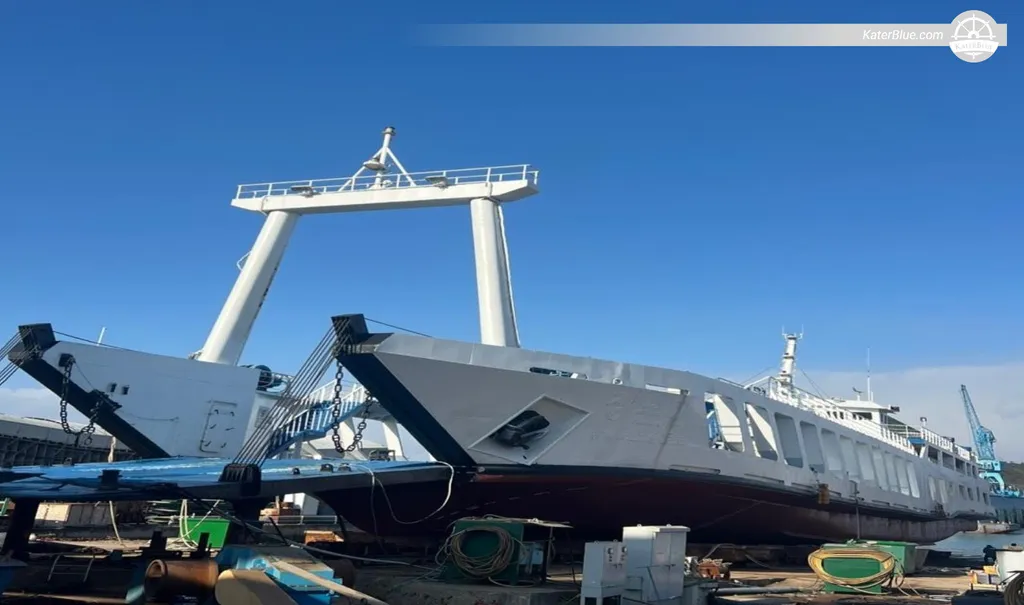
68.95m COMSA-Class LCT Passenger/Vehicle Ferry (2002, Korea) – 323 Pax, 52 Cars, Twin Yanmar, Steel RoRo
Korea

Watercraft Type:
Ferry
Model
LCT Type Passenger Ferry
Build Year
2002
Condition
Fully Operational
Description
68.95m LCT Type Passenger/Vehicle Ferry (2002) – COMSA Class, 323 Pax + 52 Cars – Korea
A high-capacity, steel-built LCT ferry tailored for heavy daily schedules. Built in 2002 to COMSA standards, this vessel blends robust structure with economy of operation, offering 323 passengers and 52-car capacity on a wide, open vehicle deck accessible by reinforced bow ramp. With recent docking and systematic servicing, it is positioned for immediate commercial deployment or conversion.
Principal Particulars
Length overall 68.95 m, beam 10.00 m, draft 2.50 m. Gross tonnage approximately 351 t; DWT about 236.7 t. The hull form is optimized for smooth-water routes and protected coastal sectors, enabling shallow approaches and fast load/unload cycles. Steel construction ensures longevity, straightforward repairs, and strong resale fundamentals.
Propulsion & Power
Twin Yanmar main engines rated at 1,000 PS each (1,800 rpm) drive a service speed near 11 knots (up to 14 knots max) at an efficient reported burn of around 130 L/h. Two Doosan auxiliaries (≈180 PS each) support hotel and deck loads with redundancy. The propulsion train is tuned for low vibration and modest noise, improving passenger comfort while aiding machinery life.
Deck Plan & Capacities
A contiguous vehicle deck accepts up to 52 cars, with marked lanes and abundant tie-down points for safe stowage. Passenger circulation benefits from clear gangways, non-skid surfaces, and well-placed stair towers. Crew working zones and mooring stations are segregated for safe, efficient port calls and ramp work.
Navigation & Safety
The bridge integrates radar, GPS, AIS, VHF, and modern plotting to support high-frequency movements in traffic-dense waters. Safety inventory complies with COMSA, including LSA, FFE, and alarm/monitoring systems. The wheelhouse sightlines and exterior deck CCTV options (if fitted/desired) support precise docking and ramp alignment.
Passenger Environment
Air-conditioned lounges and weather-protected areas suit commuter and tourism peaks. Acoustic damping and resilient mountings on the machinery reduce cabin noise. Lighting and ventilation target short-to-medium journeys, with layouts arranged to minimize bottlenecks during peak boarding windows.
Operating Profile
Designed for inter-island corridors, municipal services, and private concessions where vehicle throughput drives yield. The vehicle deck enables mixed traffic and incremental revenue even during shoulder seasons. With its predictable fuel profile and simple mechanical philosophy, the ferry supports competitive tariffs without eroding margins.
Maintenance Background
Dockings recorded in January 2025, with prior laid-up surveys in 2017 and 2022. Routine antifoul, coatings, and machinery overhauls align with commercial schedules. Documentation, class records, and logbooks are available for review during inspection and survey.
Commercial Terms
Registered in Korea under COMSA. Transparent sale process: inspection, sea trial, independent survey, deposit/escrow, closing, and delivery planning. Optional upgrade paths (electronics, seating density, cargo fixtures) can be scoped with local yards to suit route demands.
Acquisition Rationale
For operators seeking high passenger and vehicle throughput with disciplined OPEX, this 68.95m platform offers proven Korean steel, reliable Yanmar propulsion, and documentation supporting quick entry into service.
Read More
Watercraft Characteristics
Manufacturer : Local Build
Model : LCT Type Passenger Ferry
Manufactured Year : 2002
Length (meters) : 68.95
Width (meters) : 10
Draft (meters) : 2.5
Engine: in HP : 1,970 HP
Engine Type : Inboard
Max Auth. Capacity: 323
Displacement (at full load): 351000
Max. Speed (Kn) : 14.00 kn
Cruising Speed (Kn) : 11.00 kn
Building Materials : Steel
Listing Status
Manufactured Country: Korea
Condition: Fully Operational
Year of first Registration: 2002
Flag: Korea
Tax & Other Contingencies :
Cleared
Insurance details
- KaterBlue ensures all boats are insured by their owners, but advise guests to secure Travel Insurance for off-boat incidents. While boat owners cover marine accidents, guests are responsible for their valuables, or entrust to the captain. In case of an accident, captains must inform KaterBlue promptly. Owners are liable for the lack of proper insurance. Guests engaging in water sports do so at their own risk and should have personal insurance.
Location

Starting:
Varies
- {{total_price_html}}
- {{pay_now_price_html}}
REQUEST PRICE
Varies