2009 Westport W130 Motor Yacht for Sale, 39.93 m, Coral Gables
Coral Gables, United States

Τύπος πλωτού σκάφους
Πολυτελές σκάφος
Μοντέλο
Westport W130
Έτος κατασκευής
2009
Κατάσταση
Πλήρως λειτουργικό
Περιγραφή
This 39.93-metre Westport W130 is a substantial American-built motor yacht delivered by Westport Yachts in 2009 following construction that began in early 2008, with a recorded refit in 2021. The yacht represents the first build of the Westport W130 design and was developed around a semi-displacement fiberglass hull with a GRP superstructure, combining high cruising performance with substantial interior volume and a practical three-deck configuration.
Listing Highlights
- Vessel: 2009 Westport W130
- Length overall: 39.93 m
- Listing location: Coral Gables
- Reported refit: 2021
Vessel Overview & Exterior
Naval architecture is by William Garden, exterior design is by Gregory Marshall, and the interior was designed by Westport Yachts together with the owner. Measuring 39.93 metres overall, with a 35.02-metre waterline length, 7.92-metre beam and 1.90-metre draft, the yacht offers a substantial platform while retaining a relatively shallow draft for a vessel of this size. Her gross tonnage is 333 GT and stated displacement is 250 tonnes. The hull and superstructure are finished in white, with teak used for the deck surfaces across the three-deck arrangement. The semi-displacement hull form is an important part of the yacht’s character, providing a balance between volume, speed and cruising capability rather than being designed solely around either maximum efficiency or maximum speed.
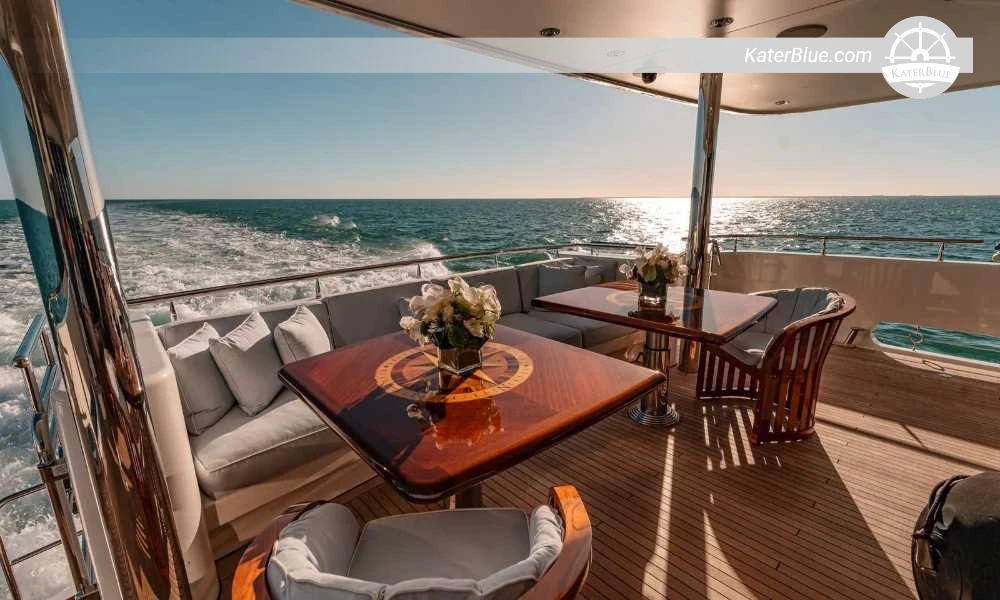
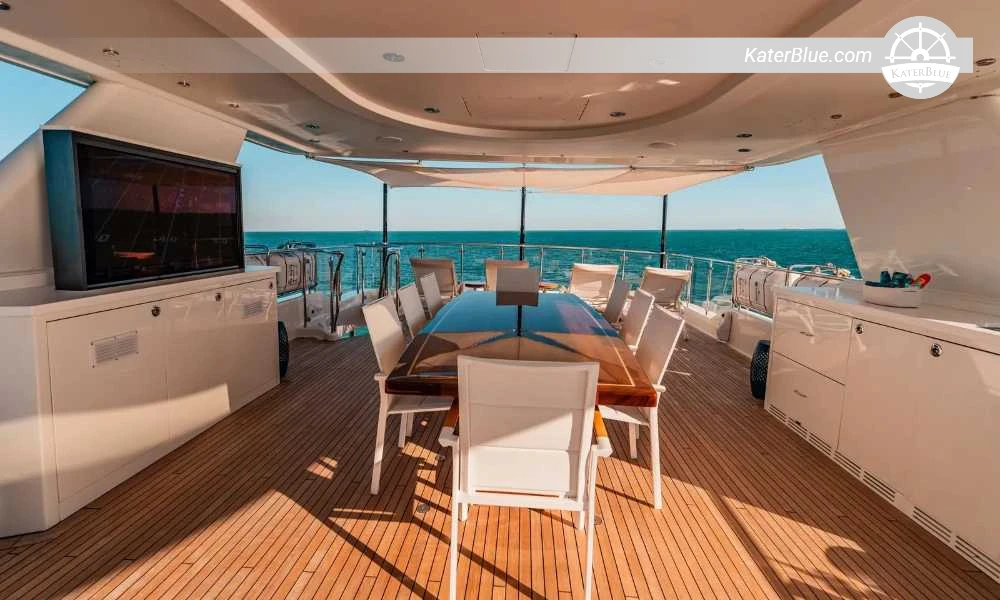
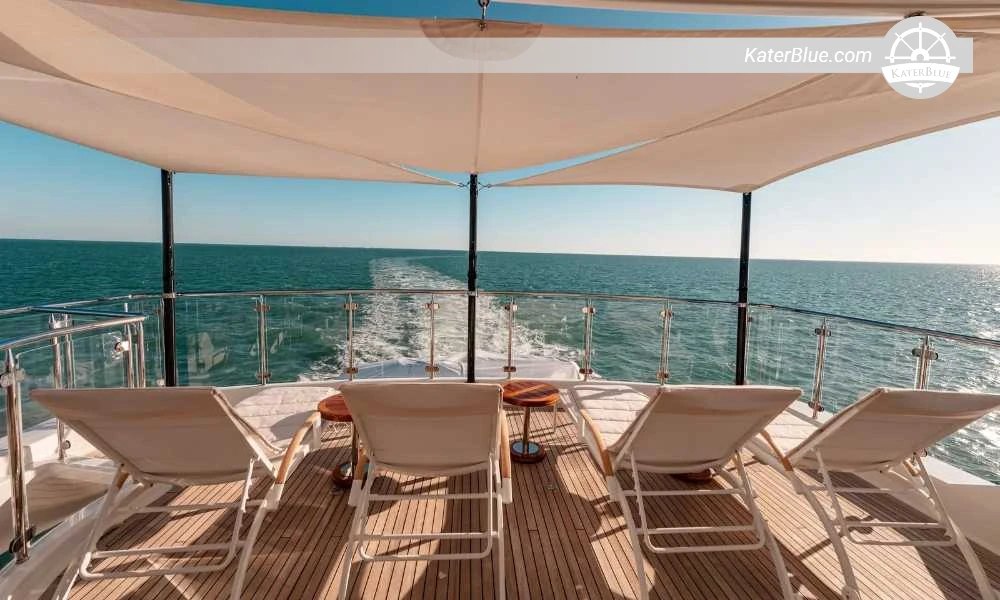
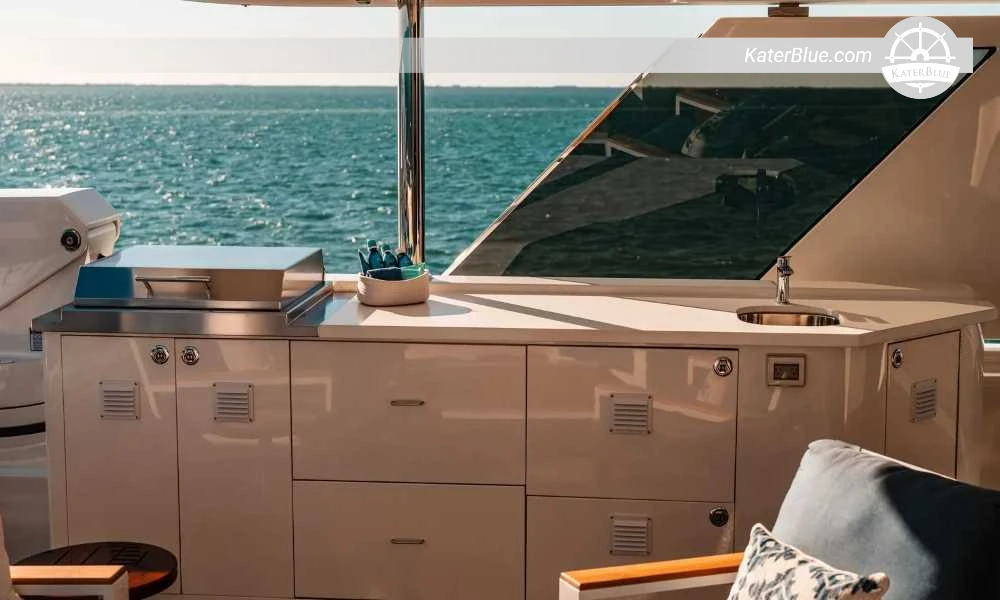
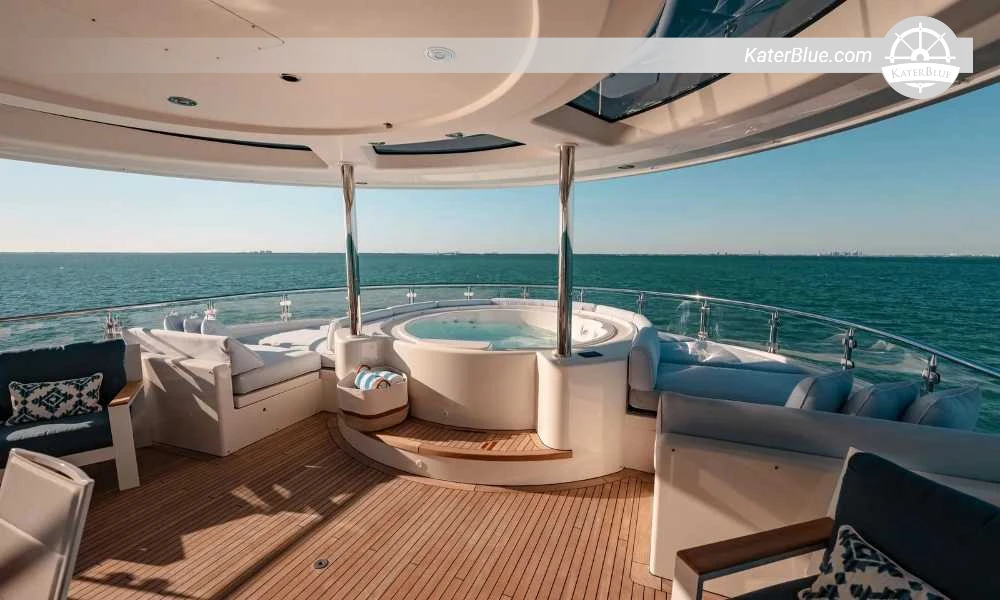
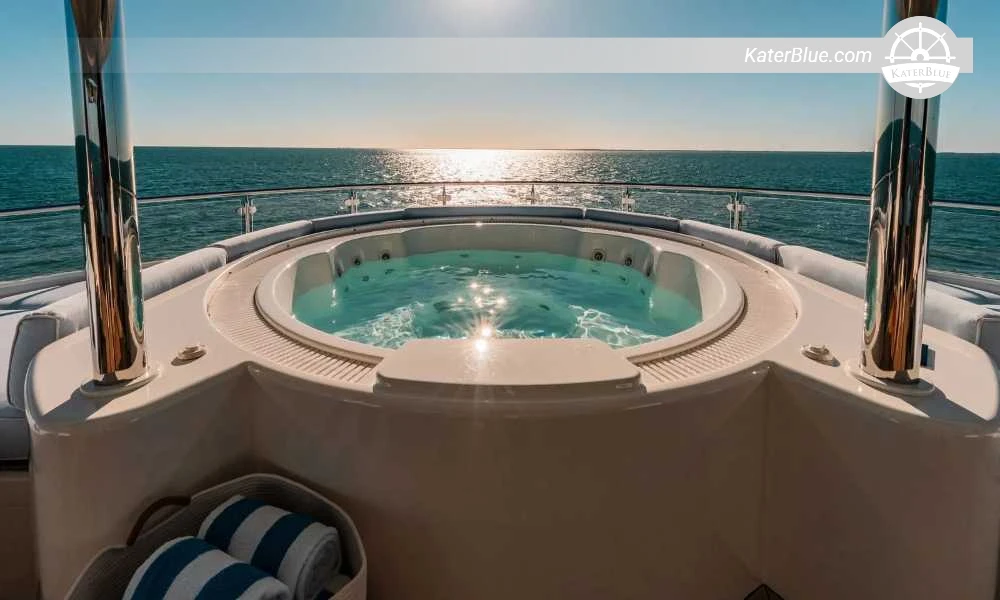
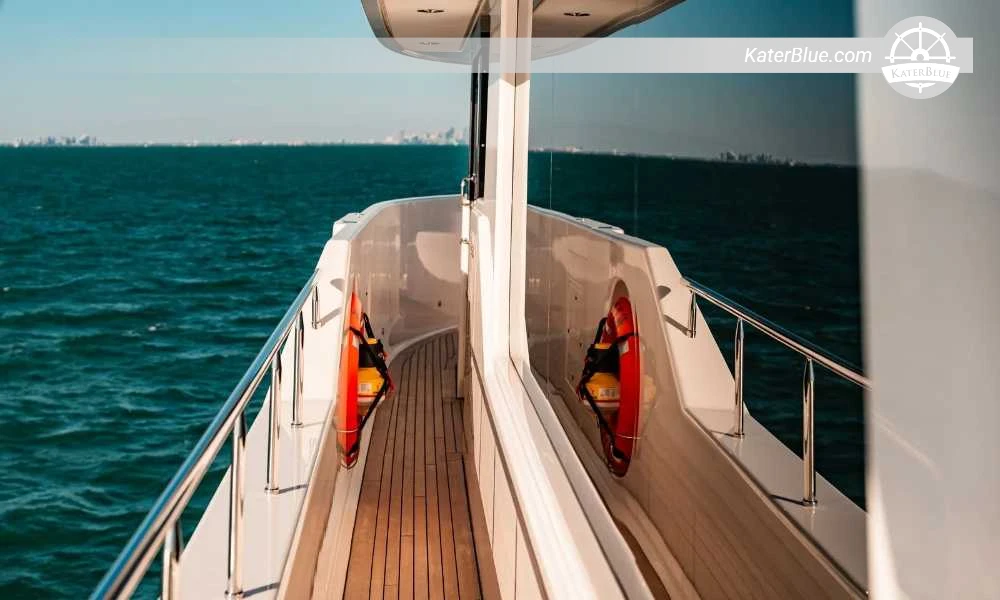
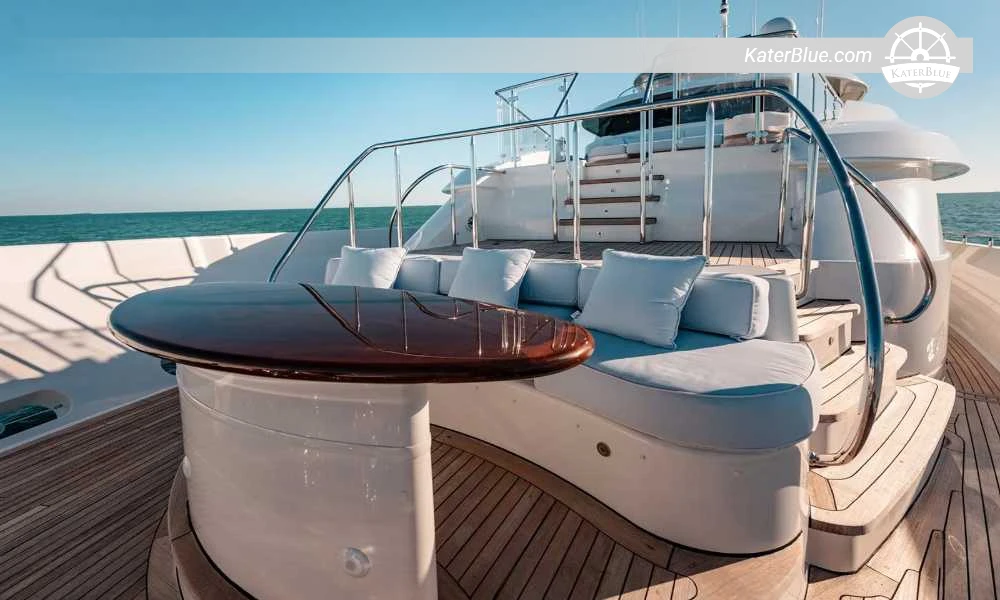
The exterior arrangement incorporates a flybridge and cockpit, with extensive outdoor areas distributed across the vessel. The foredeck is equipped with dedicated seating and a table, providing an additional guest area separated from the principal aft social spaces. The sun deck creates another elevated outdoor environment, while the cockpit provides a more sheltered area at the aft end of the main deck. Sunpads, underwater lights, a swimming platform and a deck Jacuzzi further extend the yacht’s outdoor living capabilities. The supplied amenities also include an exterior bar and outdoor bar, allowing the exterior areas to be used for informal entertaining and social gatherings.
A crane is listed among the equipment, although the supplied information does not specify its manufacturer, lifting capacity or exact location, so these details should be verified during inspection. The yacht also has both bow and stern thrusters, providing additional maneuvering assistance when entering, leaving or positioning the vessel in confined areas. Stabilizers are specified for both underway and at-anchor operation, supporting comfort during cruising and while stationary. The at-anchor stabilizer arrangement is particularly relevant to guests spending extended periods aboard, as it is intended to reduce motion when the yacht is stationary. The exterior layout provides several distinct areas for relaxation rather than relying on one principal deck.
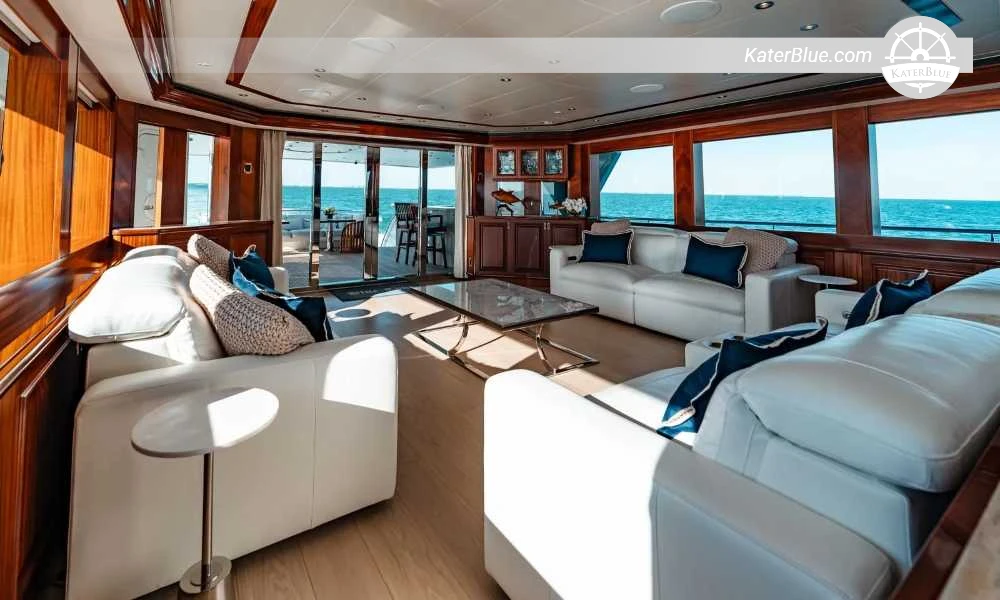
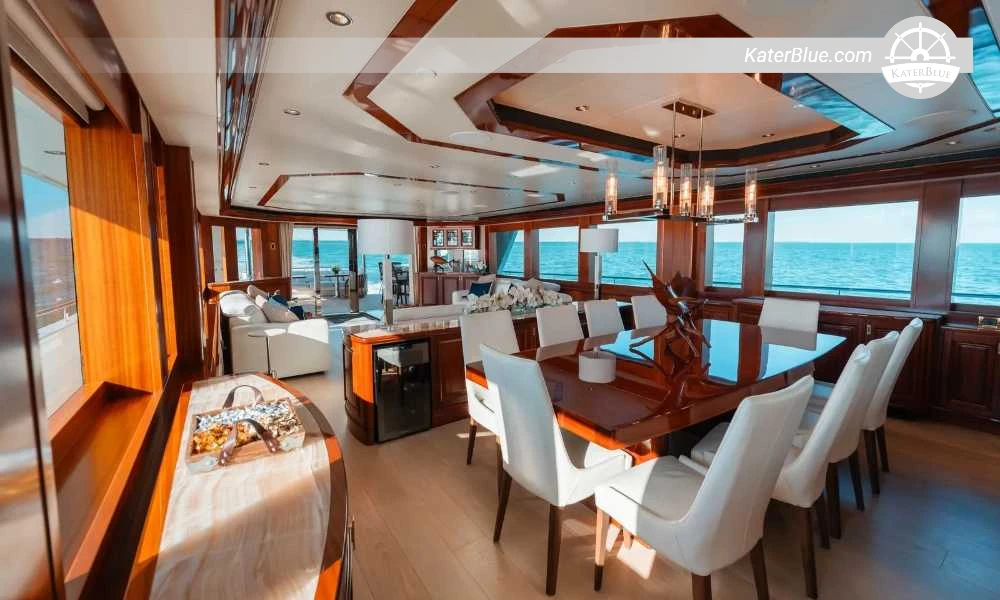
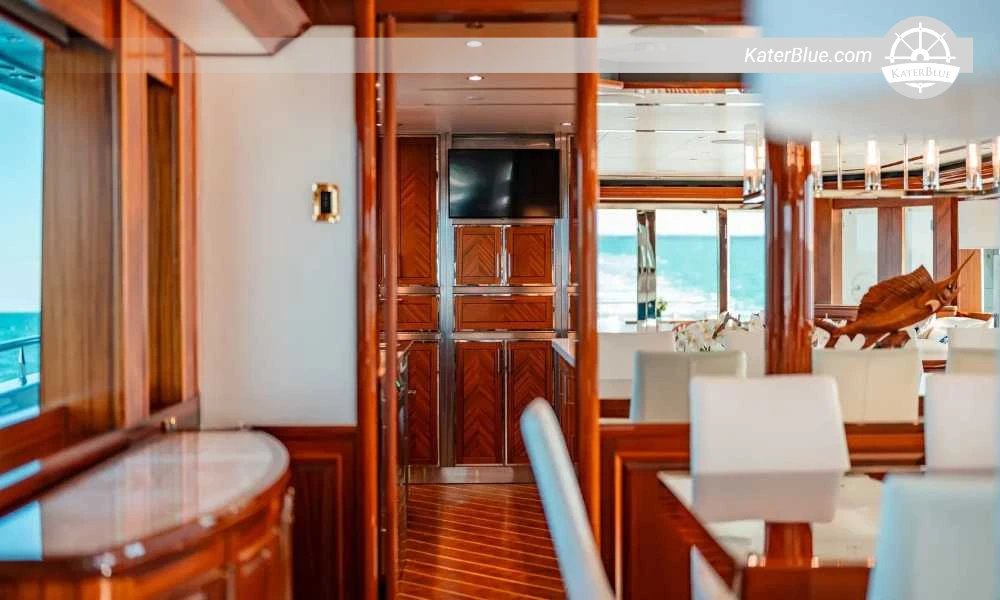
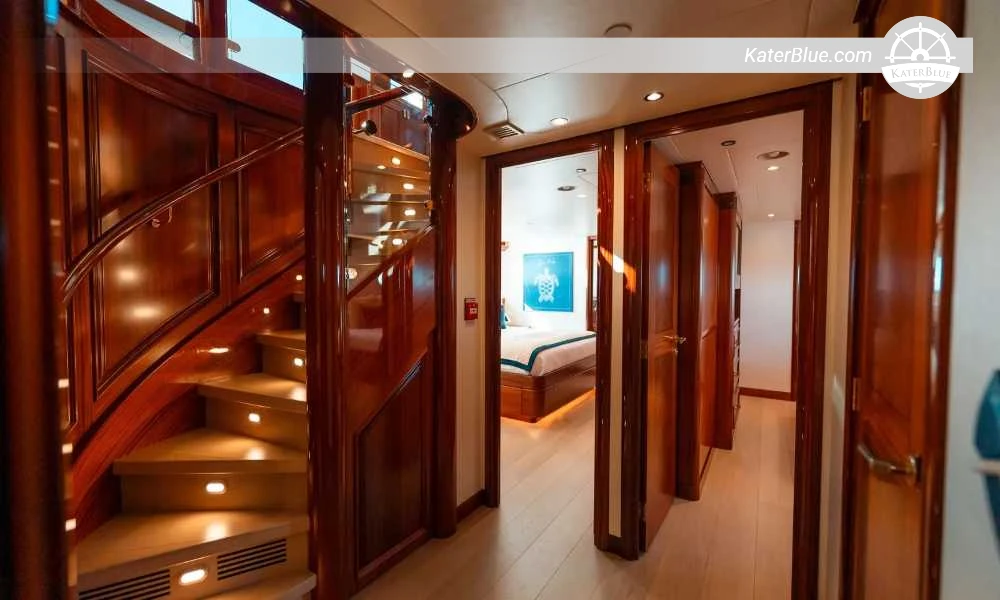
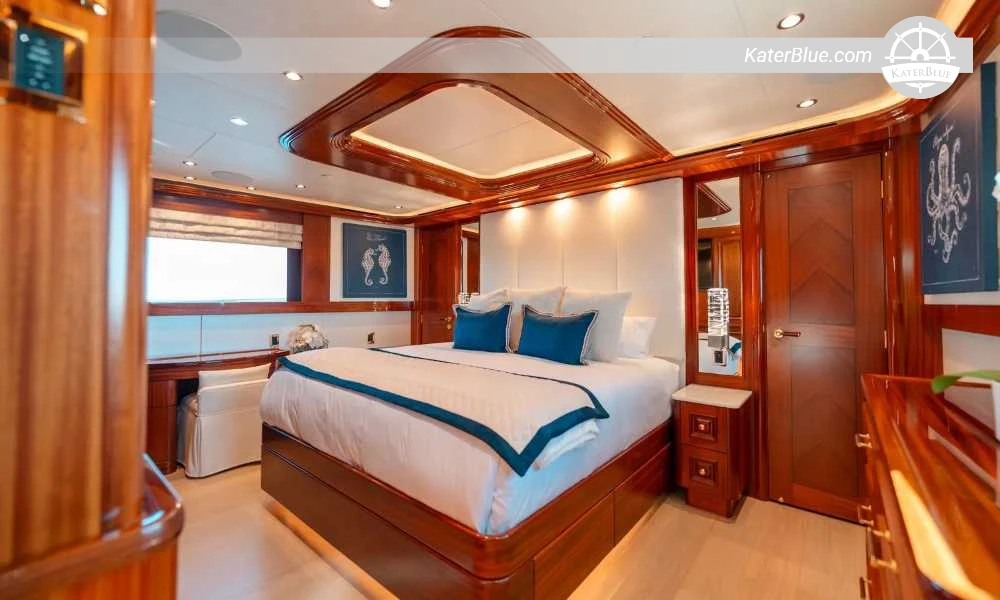
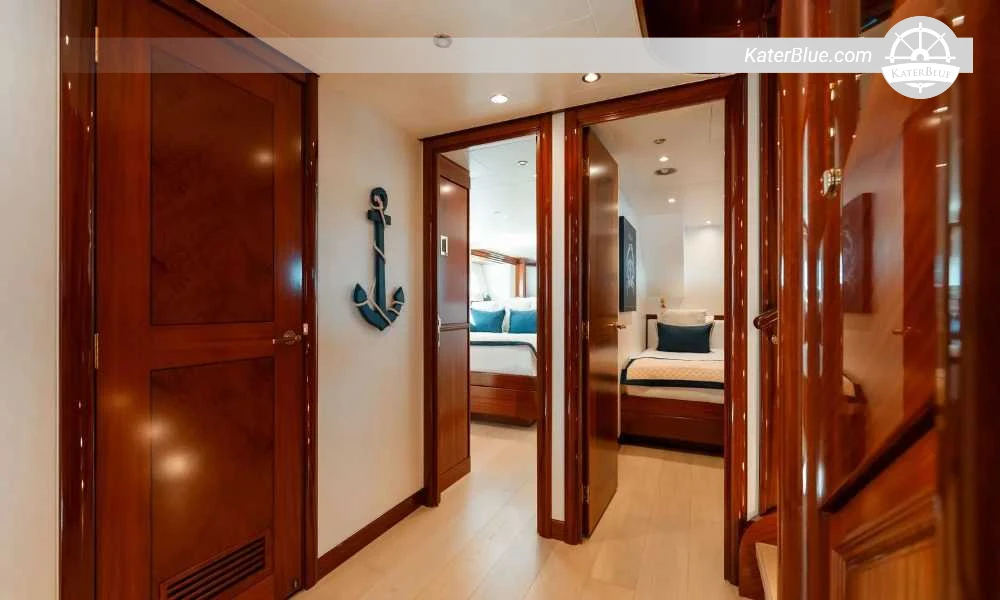
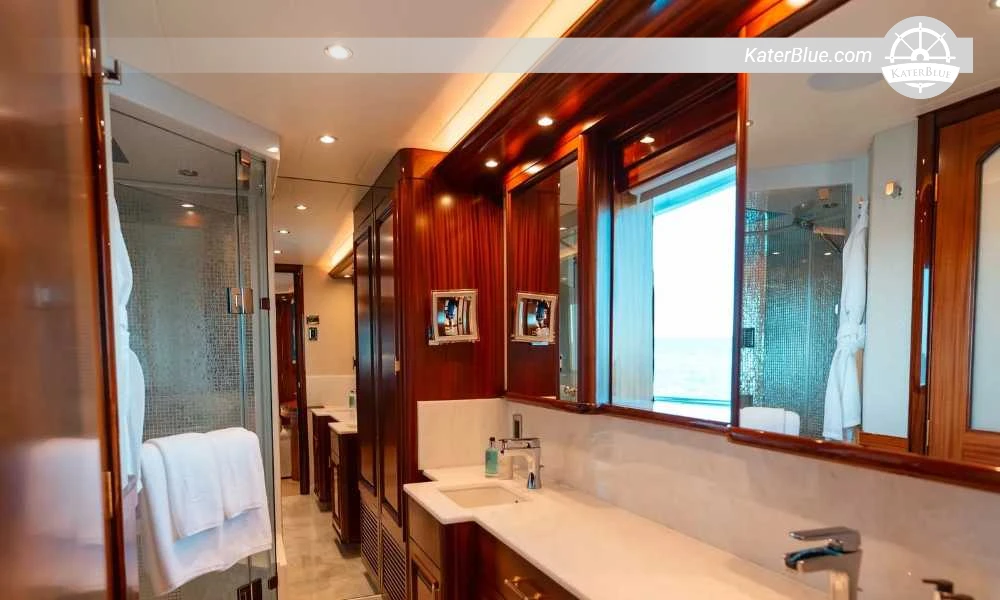
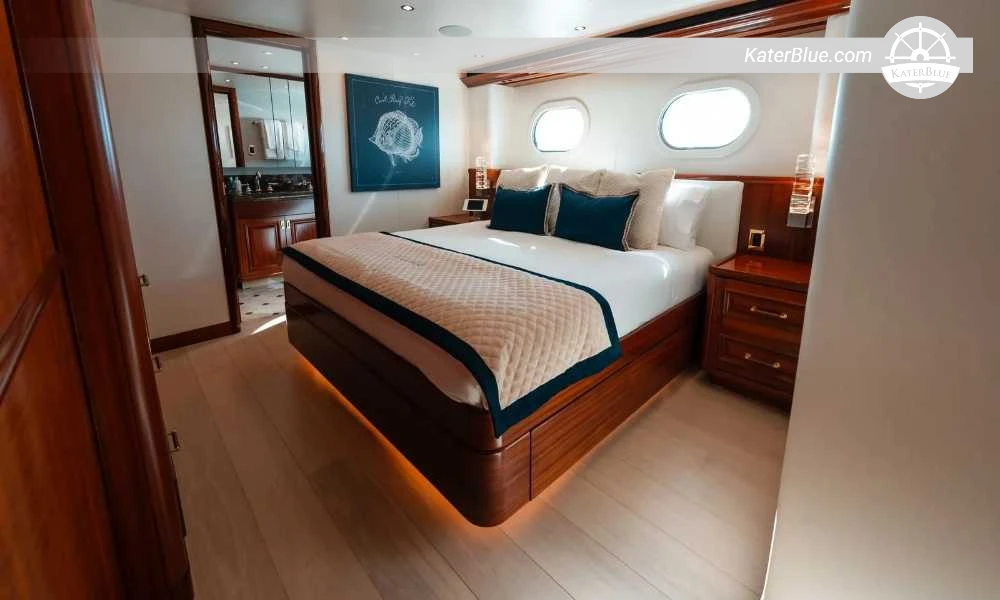
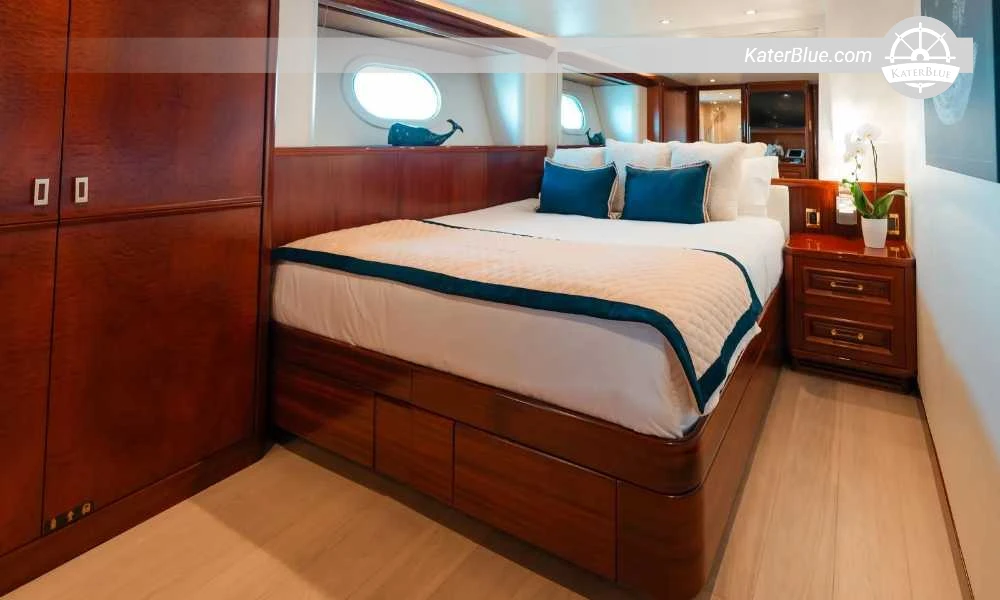
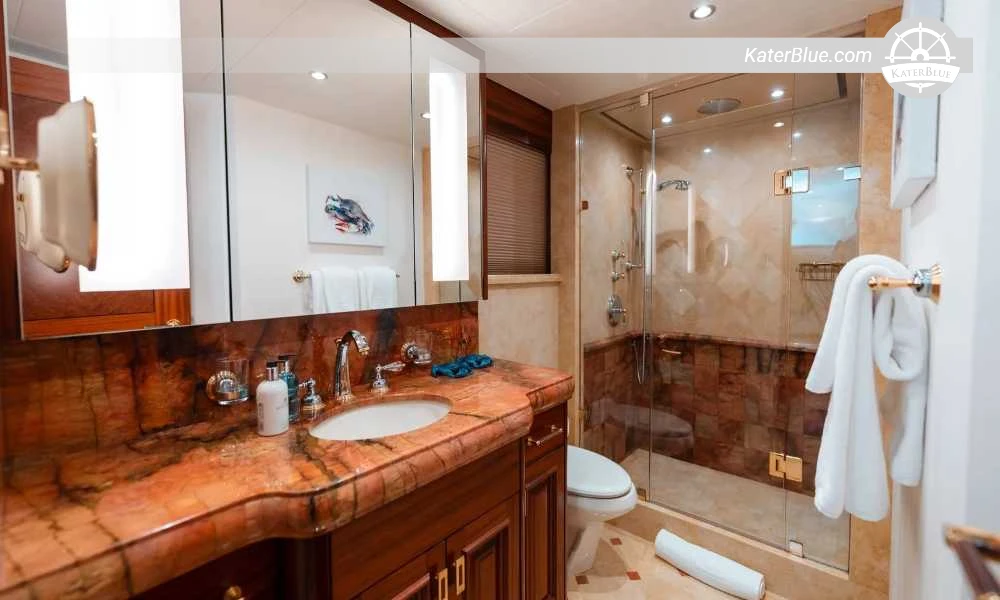
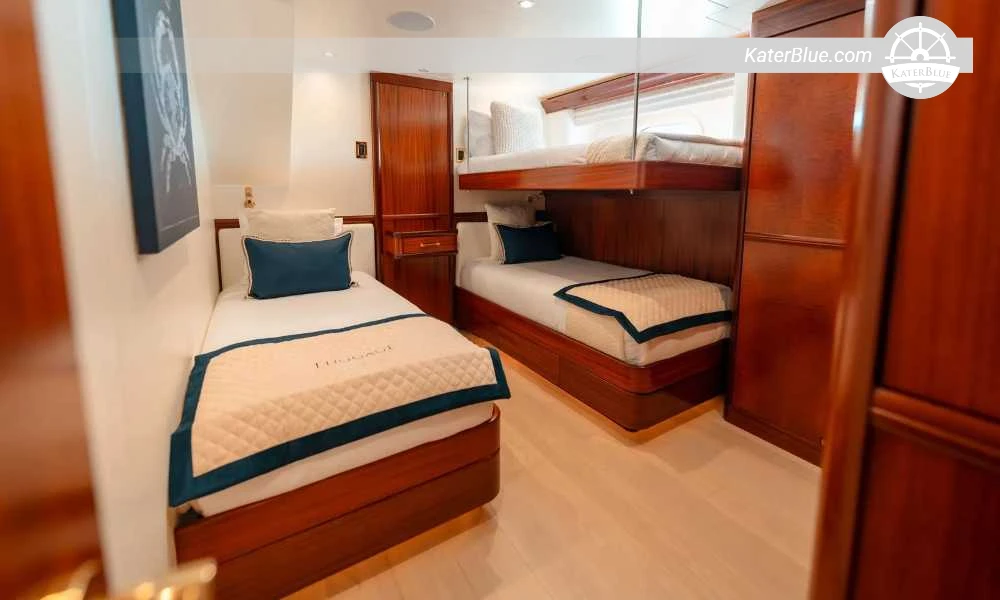
Foredeck seating creates a private forward space, the cockpit provides an aft gathering area, the sun deck offers an elevated entertainment environment and the swimming platform provides direct access to the water. The yacht also features a deck Jacuzzi and additional Jacuzzi listing, together with sunpads for outdoor relaxation. Underwater lighting adds to the evening exterior environment. Internally, the yacht provides 333 GT of volume across three decks, with an accommodation specification stating capacity for 11 guests in five cabins and seven crew in four crew cabins, with a dedicated captain’s cabin. The supplied detailed cabin arrangement lists an owner’s cabin, two VIP cabins, two double cabins, two twin cabins and one Pullman berth.
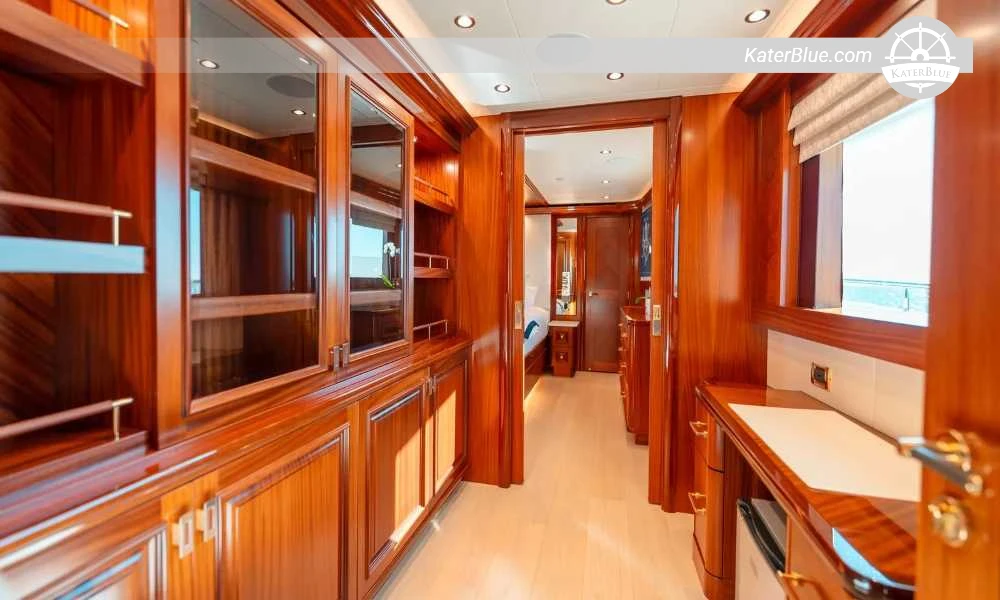
Because this detailed arrangement does not correspond numerically with the separately stated five-cabin figure, the final cabin configuration and berth count should be confirmed against the current onboard arrangement and official documentation during inspection. The owner’s area includes a dedicated study, providing a private working or administrative space that is useful for longer periods aboard. The yacht is equipped with air conditioning, supporting interior comfort in warm cruising environments, while satellite television, video-on-demand, Wi-Fi, Starlink and Satcom provide a broad communications and entertainment platform.
The supplied information does not specify individual television models, audio equipment, lighting-control systems, heating systems, soundproofing specifications or insulation ratings, so those details should be established through onboard inspection and the equipment inventory rather than assumed. The combination of substantial interior volume, dedicated owner workspace, multiple accommodation areas and extensive exterior living spaces makes this Westport W130 suitable for owners seeking a high-performance motor yacht that can support both private family cruising and longer periods aboard.
The three-deck layout, flybridge, cockpit, foredeck seating, Jacuzzi areas and swimming platform provide flexibility for different styles of use, while the semi-displacement hull allows the yacht to combine considerable living space with significantly higher speeds than a conventional full-displacement cruising yacht.
Performance, Machinery & Systems
The yacht’s engineering package is centered around twin MTU 12V4000 M90 diesel engines, each producing 2,735 hp, or 2,013 kW, at 2,100 rpm. Combined engine output is stated at 5,470 hp, equivalent to 4,026 kW. Propulsion is through twin screw propellers. This power package gives the yacht a stated maximum speed of 24 knots and a cruising speed of 20 knots, while an economic speed of 12 knots provides the basis for the stated 3,000-nautical-mile range. Fuel capacity is 36,075 litres, providing substantial fuel storage for a yacht designed around both high-speed passages and longer-range economical cruising.
The relationship between the 12-knot economic speed and 3,000-nautical-mile stated range is particularly useful when evaluating the yacht for longer passages, as it allows the owner to select between higher-speed cruising and more economical long-distance operation. The semi-displacement hull contributes to this combination by providing the hydrodynamic characteristics necessary for high-speed operation while retaining a substantial hull volume. The supplied information does not include certified fuel-consumption figures at the different operating speeds, so specific litres-per-hour or nautical-mile fuel-efficiency figures should be confirmed from the engine records and sea-trial data. Likewise, no emissions or alternative-fuel technology has been specified, so no additional sustainability claims should be attributed to the yacht.
The propulsion specification confirms twin screw propellers, while the supplied details do not provide the propeller manufacturer, shaft diameter, shaft material, coupling specification, stern-tube configuration or rudder details. The yacht is fitted with both bow and stern thrusters, providing additional low-speed maneuverability, while underway and at-anchor stabilizers are specified to improve onboard comfort. The machinery specification provided does not include engine serial numbers, recorded engine hours, gearbox models, engine-mount details, cooling-system configuration, fuel-filter models or exhaust-system specifications. These items are important technical elements of a professional pre-purchase inspection and should be verified directly from the machinery and maintenance records.
The same applies to generator make, model, output, operating hours, servicing history and redundancy, none of which are identified in the supplied material. The electrical system specifications have also not been supplied in sufficient detail to state the size or type of battery banks, electrical panels, breakers, inverter/charger systems or shore-power connections. These systems should therefore be inspected and documented as part of the technical due-diligence process. Plumbing specifications such as freshwater pumps, bilge pumps, water heaters, holding tanks and grey- and black-water arrangements have likewise not been provided.
The freshwater capacity is stated at 6,738 litres, giving the yacht substantial onboard water storage, but the supplied information does not establish the precise tank configuration, pump capacities or water-treatment equipment. The 36,075-litre fuel capacity and 6,738-litre freshwater capacity should both be verified against tank documentation during the survey. From an operational perspective, the combination of 24-knot maximum speed, 20-knot cruising speed, 12-knot economic speed and 3,000-nautical-mile stated range gives the yacht flexibility across different cruising requirements. Owners prioritizing rapid passage-making can use the yacht’s high-speed capability, while longer-distance itineraries can be planned around the stated economic range.
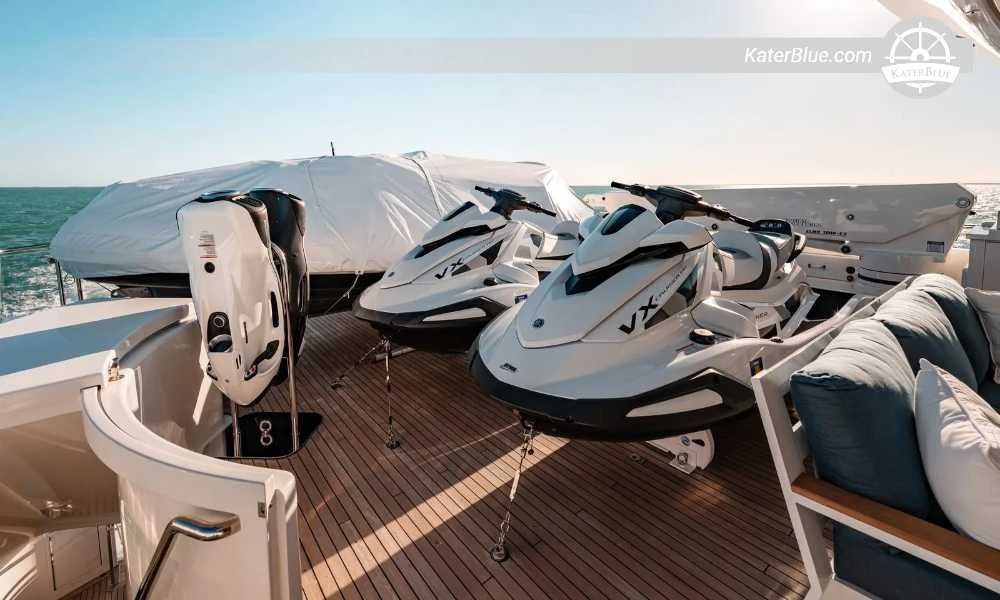
The tender inventory adds significant versatility for water access and shore transfers, with one 9.45-metre Novurania towed tender, one 5.49-metre Nautica and one 4.27-metre Jet RIB listed aboard. The presence of three listed tender craft provides buyers with a substantial operational package, although the precise condition, year, engines, equipment and ownership status of each tender should be verified as part of the sale inventory. The crane is particularly relevant to tender operations, but its lifting capacity and current certification are not supplied and should be checked before reliance on it for launching or recovery.
For technical buyers, the combination of twin high-output MTU engines, twin-screw propulsion, bow and stern thrusters, underway stabilizers, at-anchor stabilizers, a substantial fuel capacity and three listed tender craft provides a strong basis for evaluating the yacht as a capable high-performance cruising platform, while a professional machinery survey remains necessary to establish the actual present condition of each component.
Accommodation, Comfort & Equipment
The onboard lifestyle is designed around a combination of private accommodation, entertainment facilities and extensive exterior living. The owner’s study provides a dedicated private workspace, while the accommodation specification identifies an owner’s cabin, VIP accommodation, double cabins, twin cabins and a Pullman berth within the supplied configuration. Seven crew are stated to be accommodated in four crew cabins, with a separate captain’s cabin, supporting an operational arrangement designed to keep crew functions distinct from guest spaces. The principal guest areas benefit from air conditioning, while the exterior amenities include a sun deck, foredeck seating with table, sunpads, cockpit, swimming platform, deck Jacuzzi, outdoor bar and underwater lighting.
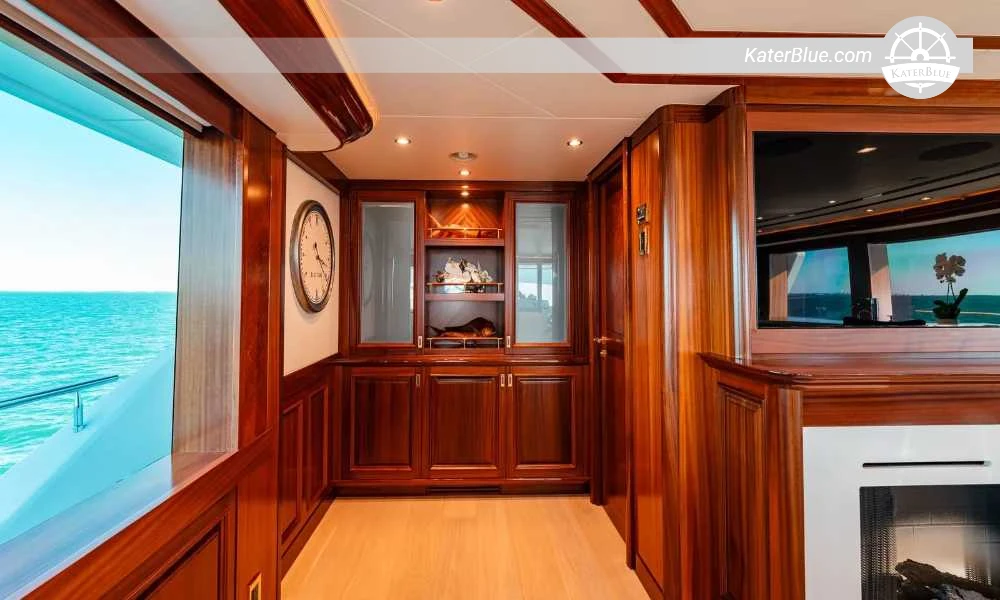
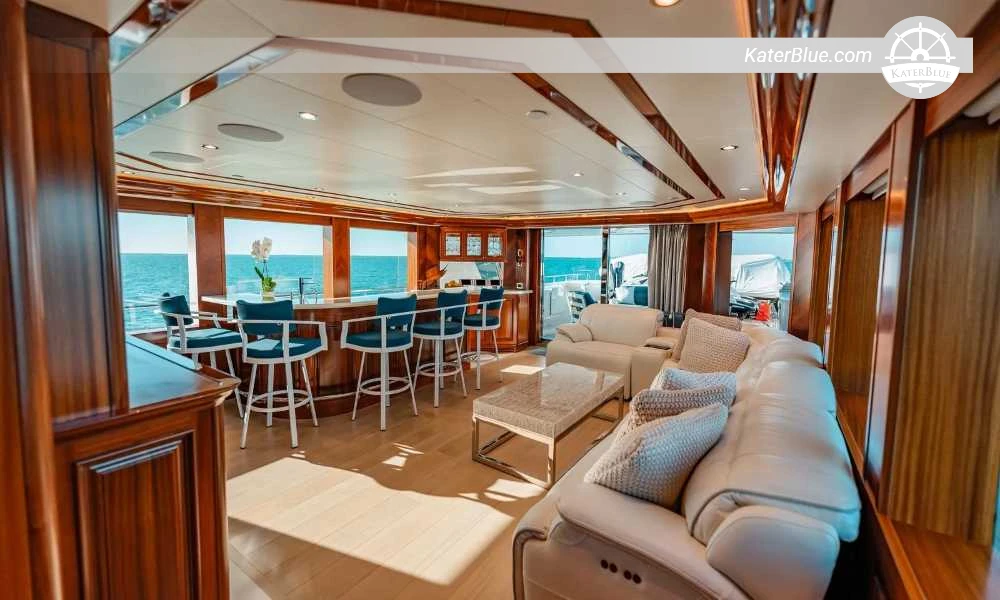
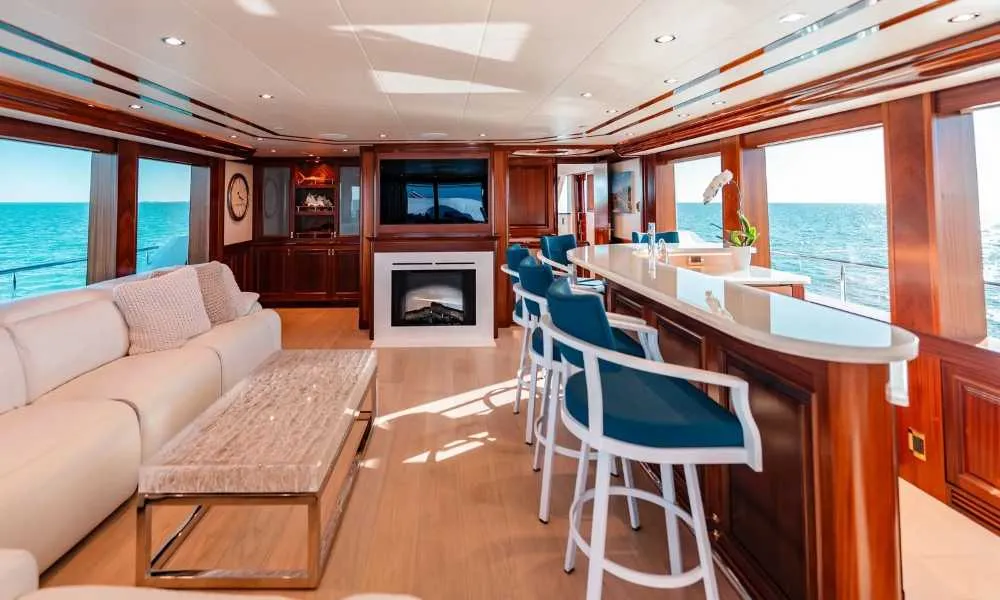
The foredeck seating offers an alternative location away from the aft social areas and provides a useful setting for relaxing while underway or at anchor. The sun deck serves as an elevated outdoor area for entertaining and relaxation, while the cockpit provides a more sheltered connection between the interior and aft deck. The swimming platform creates a practical point for accessing the water, launching water equipment and enjoying time at anchor. The deck Jacuzzi adds another recreational feature, while the exterior bar and outdoor bar facilities support entertaining. The yacht is also equipped with a fireplace, although the supplied details do not identify its location or operating system, so these points should be confirmed during the onboard inspection.
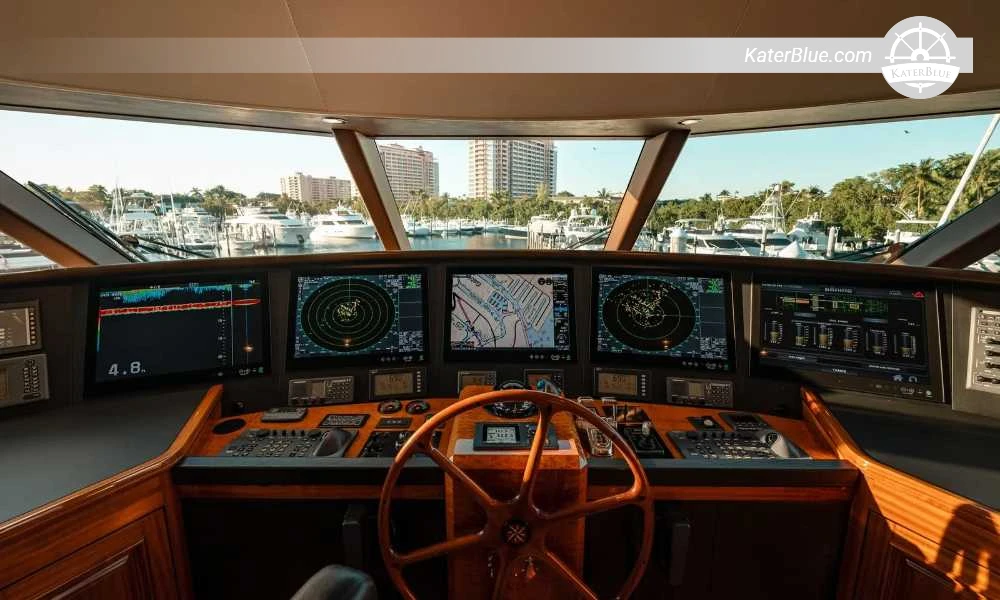
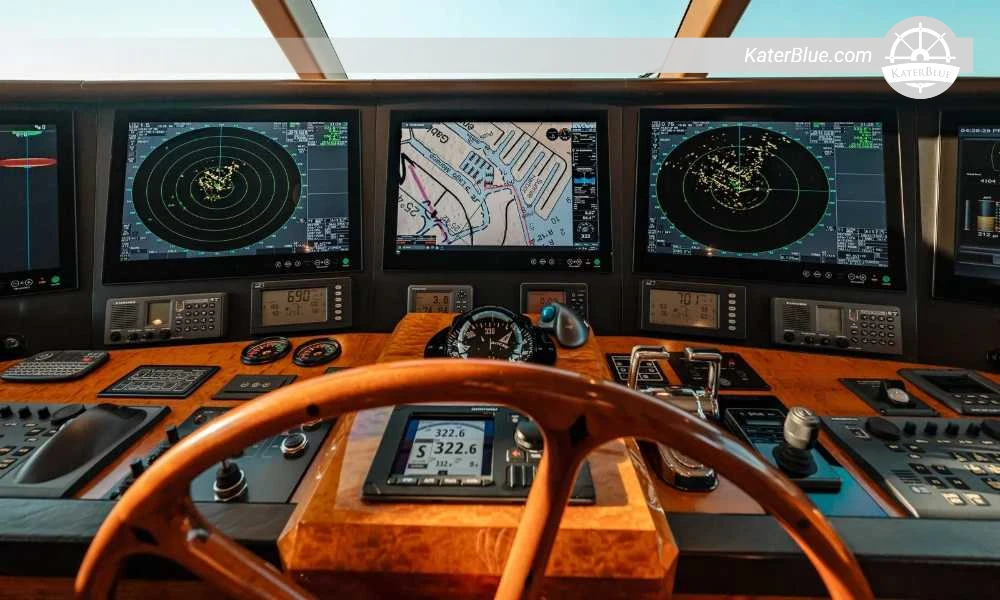
The interior entertainment and communications package includes video-on-demand, satellite television, Starlink, Wi-Fi and Satcom. These systems can support both entertainment and connectivity during extended periods at sea, although buyers should verify the exact installed hardware, subscriptions, service arrangements and transferability of any communications services. No specific navigation inventory has been provided for individual autopilot, radar, GPS, AIS, chart plotter or sonar units. Consequently, those systems should not be represented as installed unless confirmed from the current onboard electronics inventory. The same applies to security systems and other advanced electronics.
Navigation and communication equipment should be inspected and operationally tested as part of the sea trial and survey process, with particular attention to instrument accuracy, display condition, sensor operation and communication functionality. Safety equipment should similarly be verified independently. The supplied information does not provide current details for fire-suppression systems, portable extinguishers, life rafts, expiry dates, emergency beacons or other statutory safety equipment, and therefore no certification status or expiry date should be assumed. The yacht’s United States flag is stated in the principal characteristics. The information provided does not identify a classification society or current classification notation, so classification status should be confirmed through the official documentation.
The supplied information also does not establish VAT-paid status, import-duty status, tax history or other jurisdiction-specific tax obligations. These matters can be material to an international yacht purchase and should be confirmed through the vessel’s registration and financial documentation, with the buyer obtaining professional tax advice for the intended place of ownership, operation or importation. The number of previous owners, detailed past usage history and complete title history have not been supplied and should likewise be established during the transaction. The yacht was delivered in 2009 and has a recorded 2021 refit, but the supplied information does not describe the scope of that refit, the specific systems replaced or upgraded, warranty coverage, engine overhauls, antifouling work, structural repairs or service history.
These details should be supported by invoices, yard records, maintenance logs and other available documentation. The same due-diligence approach applies to the hull and underwater areas. The fiberglass semi-displacement hull, GRP superstructure and teak decks should be inspected for structural condition, moisture, repairs, surface finish and wear. The Hull Identification Number or equivalent identification documentation should be checked against registration and title records, while the underwater hull, propeller shafts, propellers, rudders, thrusters and stabilizer components should be inspected during haul-out where possible. The condition of the antifouling coating should be documented at the time of survey rather than assumed from the yacht’s age or refit date.
Because this is a motor yacht, sailboat-specific components such as mast base, spreaders, standing rigging, winches and sails are not applicable to the supplied specification. The three listed tenders should also be examined separately, including hull condition, engines, steering, electrical systems, safety equipment and documentation. The yacht’s broad exterior arrangement, substantial tender inventory and combination of high-speed and economic cruising capabilities make it potentially suitable for private family use, extended cruising and entertaining, while the presence of seven crew accommodation positions supports professional onboard operations.
Any consideration of commercial or charter use should be subject to confirmation of applicable licensing, insurance, flag requirements and regulatory permissions rather than assumed from the vessel’s physical capabilities.
Maintenance, Documentation & Purchase
The acquisition of this Westport W130 should be approached through a structured sales and purchase process designed to give the buyer a clear understanding of the yacht’s condition, documentation and included equipment before completion. The first stage should involve a detailed review of the yacht’s principal specifications, registration documents, available title records, refit documentation, maintenance history, machinery records, equipment inventory and tender documentation. An onboard inspection should then examine the hull, superstructure, teak decks, interior, accommodation, machinery spaces, exterior areas, navigation systems, electrical equipment, plumbing, stabilizers, thrusters, tender equipment and safety systems.
A professional marine survey is strongly recommended for a yacht of this size and complexity, with separate technical inspections of the main engines, propulsion equipment and major onboard systems where appropriate. A haul-out inspection can be used to examine the underwater hull, antifouling, propellers, shafts, rudders, thrusters and stabilizer components, while an engine-room inspection can assess the MTU propulsion machinery, gearboxes, mounts, cooling systems, exhaust systems, fuel systems and associated equipment. Where agreed between buyer and seller, a sea trial should be used to evaluate acceleration, cruising performance, maximum-speed capability where appropriate, steering, maneuverability, engine operation, vibration, thruster operation, stabilizer performance and the functioning of major onboard systems.
The supplied information does not confirm whether a trial charter is available, so no trial charter arrangement should be assumed. The final purchase agreement should clearly establish the purchase price, deposit amount, payment schedule, conditions of closing, included tenders and equipment, documentation to be transferred and responsibility for delivery. The supplied information does not state a required deposit percentage, escrow provider, financing arrangement or leasing option, so these matters should be negotiated and documented rather than assumed. If financing is required, buyers should separately establish whether a lender or leasing provider can support the acquisition and what registration, valuation and survey requirements will apply.
Any deposit or completion funds should be handled according to the executed sale agreement and through the agreed secure payment or escrow mechanism where applicable. Before completion, the buyer should verify that the yacht’s registration, title, identification numbers, tax position and any applicable liens or encumbrances are properly documented. The United States flag should be confirmed through current registration documentation, while any VAT, import-duty or local tax position should be independently verified for the buyer’s intended jurisdiction. The recorded 2021 refit should be supported by available yard or service documentation so that the buyer can understand what work was completed and when.
The condition and documentation of the three listed tenders should also be incorporated into the final inventory, together with any spare parts, tools, accessories or additional equipment expressly included in the contract. Delivery and handover arrangements should specify where the yacht will be delivered, who is responsible for relocation or repositioning costs, how insurance will be handled during delivery and which onboard stores, equipment and tender craft form part of the completed sale. No relocation service, warranty transfer, financing package or post-sale service has been specified in the supplied information, so none should be treated as included unless expressly agreed in writing.
From a buyer’s perspective, the yacht’s core proposition is defined by her 39.93-metre length, 333 GT volume, 250-tonne stated displacement, semi-displacement fiberglass construction, three-deck layout, twin 2,735 hp MTU engines, 24-knot maximum speed, 20-knot cruising speed, 12-knot economic speed and stated 3,000-nautical-mile range. Her combination of high-performance propulsion, bow and stern thrusters, underway and at-anchor stabilizers, extensive exterior areas, owner’s study, Jacuzzi, swimming platform, multiple entertainment and communication systems, and three listed tenders gives prospective owners a broad platform for private cruising and extended use.
The 2021 refit provides an important point for further documentary review, while the final purchase decision should be based on verified survey findings, sea-trial performance, current machinery condition, registration and tax documentation, title history and the precise inventory agreed in the sale contract. With a thorough inspection and transparent purchase process, prospective buyers can evaluate the yacht on documented technical condition, operational capability, onboard accommodation, equipment and confirmed transaction terms rather than relying on assumptions. This approach also provides a clear framework for negotiating any survey findings, confirming the final inventory and completing the handover with the relevant technical, legal and registration documentation in place.
Enquire about this 2009 Westport W130 in Coral Gables and ask for its technical and maintenance records. A viewing can help assess the owner's study, flybridge and dual-mode stabilization before an independent survey and the final purchase agreement.
Διαβάστε περισσότερα
Χαρακτηριστικά
Κατασκευαστής : Westport
Μοντέλο : Westport W130
Κατασκευασμένο έτος : 2009
Αριθμός καμπίνας : 9
Κρεβάτια : 18
Μήκος (μέτρα) : 39.93
Πλάτος (μέτρα) : 7.92
Βύθισμα (μέτρα) : 1.9
Μηχανή: σε HP : 2x 2735
Τύπος κινητήρα : 2x MTU 12V4000 M90
Max Auth. Χωρητικότητα: 11
Χωρητικότητα δεξαμενής καυσίμου: 36075 ltr
Χωρητικότητα γλυκού νερού: 36075 ltr
Displacement (at full load): 250000
Max. Ταχύτητα (Kn) : 24.00 kn
Exterior Style & Concept: Westport Yachts Owner
Interior_designer: Gregory Marshall
Κατάσταση καταχώρισης
Κατασκευάστηκε Χώρα: United States
Κατάσταση: Πλήρως λειτουργικό
Κατάσταση: Έτος πρώτης ταξινόμησης: 2009
Σημαία: United States
Φόροι και άλλα απρόβλεπτα :
Εκκαθαρισμένο
Ασφαλιστικές λεπτομέρειες
- Η KaterBlue διασφαλίζει ότι όλα τα σκάφη που διατίθενται προς ενοικίαση είναι ασφαλισμένα από τους αντίστοιχους ιδιοκτήτες τους. Σας συνιστούμε να εξασφαλίσετε ταξιδιωτική ασφάλεια για την προστασία από τυχόν περιστατικά ή απώλειες που συμβαίνουν εκτός σκάφους. Ενώ οι ιδιοκτήτες των σκαφών παρέχουν ασφάλεια για τα σκάφη, τα γιοτ, το πλήρωμα και τους επισκέπτες τους έναντι πυρκαγιάς, συγκρούσεων και άλλων θαλάσσιων ατυχημάτων, οι επισκέπτες είναι υπεύθυνοι για την προστασία των τιμαλφών τους κατά τη διάρκεια της περιήγησης. Εάν το προτιμούν, οι επισκέπτες μπορούν να παραδώσουν τα πολύτιμα αντικείμενά τους στον καπετάνιο του σκάφους για φύλαξη. Σε περίπτωση ατυχήματος ή καταστροφής, είναι ευθύνη των καπετάνιων των σκαφών να ενημερώσουν αμέσως την KaterBlue ή τον εκπρόσωπό της. Εάν οι ιδιοκτήτες των σκαφών δεν έχουν ολοκληρώσει τις απαραίτητες ασφαλιστικές ρυθμίσεις, θα είναι πλήρως υπεύθυνοι. Οι ναυλωτές και οι επισκέπτες που επιθυμούν να συμμετάσχουν σε θαλάσσια σπορ το κάνουν με δική τους ευθύνη και θα πρέπει να διασφαλίσουν ότι έχουν τη δική τους ασφαλιστική κάλυψη.
Τοποθεσία

Ξεκινώντας:
£13,515,000
- {{total_price_html}}
- {{pay_now_price_html}}
REQUEST PRICE
Τιμή εκκίνησης πώλησης
£13,515,000