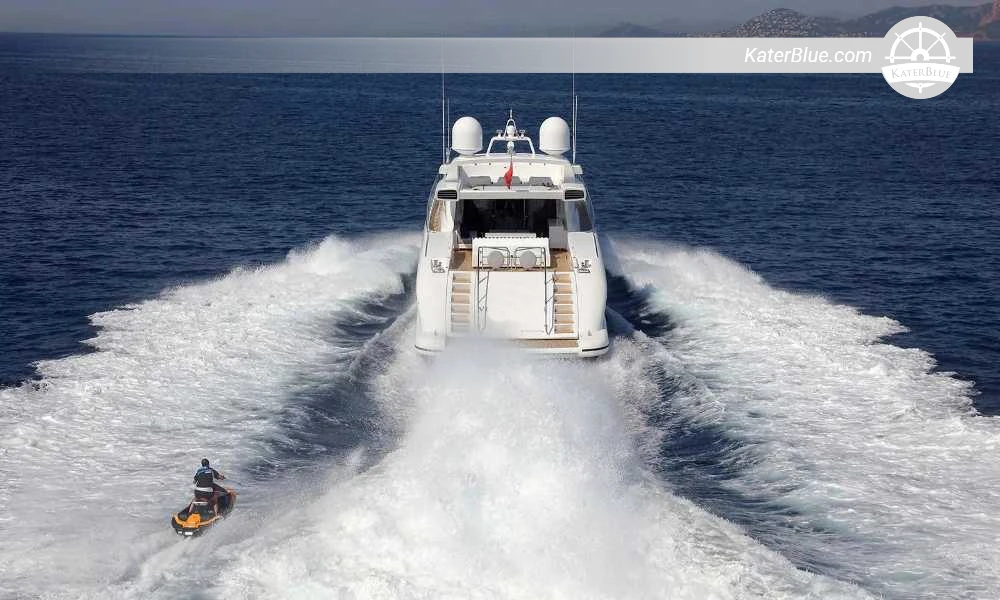
2006 Mangusta 130 Sport Yacht for Sale, 39.65 m, Nice
Nice, France

Τύπος πλωτού σκάφους
Πολυτελές σκάφος
Μοντέλο
Mangusta 130
Έτος κατασκευής
2006
Κατάσταση
Πλήρως λειτουργικό
Περιγραφή
This 39.65-metre Mangusta 130 is a high-performance Italian open motor yacht combining an exceptionally powerful propulsion package, a sleek planing GRP hull, a shallow 1.35-metre draft and an interior designed around open, sociable living. Delivered by Mangusta in 2006 and refitted in 2019, the yacht was designed as the seventh example of the Mangusta 130 series, with naval architecture by Mangusta, exterior design by Stefano Righini and interior styling by Maxine Tissenbaum.
Range figures require clarification: 599 nautical miles at 34 knots is quoted despite a 32-knot stated maximum speed, while another range reference is approximately 400 nautical miles. Use verified operating and consumption data to establish realistic range.
Listing Highlights
- Vessel: 2006 Mangusta 130
- Length overall: 39.65 m
- Listing location: Nice
- Reported refit: 2019
Vessel Overview & Exterior
Measuring 39.65 metres overall, with a 34-metre waterline length, 7.76-metre beam and 1.35-metre draft, she has a low-profile configuration intended to combine speed, outdoor living and access to cruising areas where a deeper-draft vessel may face greater limitations. Her 265 GT internal volume and 145-tonne displacement provide substantial space within a performance-focused platform, while the two-deck arrangement and teak deck material contribute to both practicality and the characteristic appearance of a luxury open yacht. The GRP hull and GRP superstructure are finished in white, giving the yacht a clean and contemporary exterior appearance that complements the strongly sculpted lines of the Mangusta design.
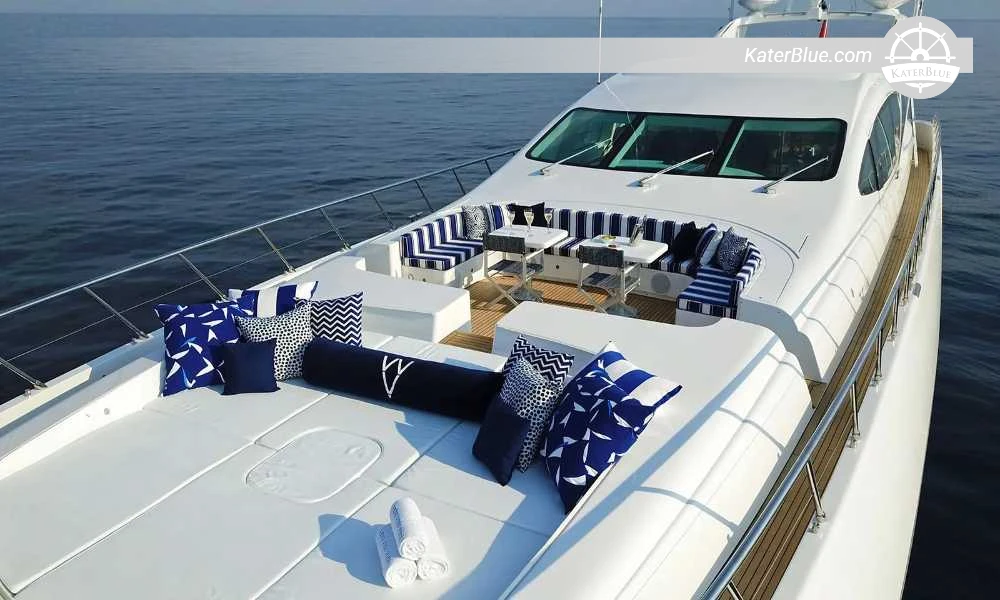
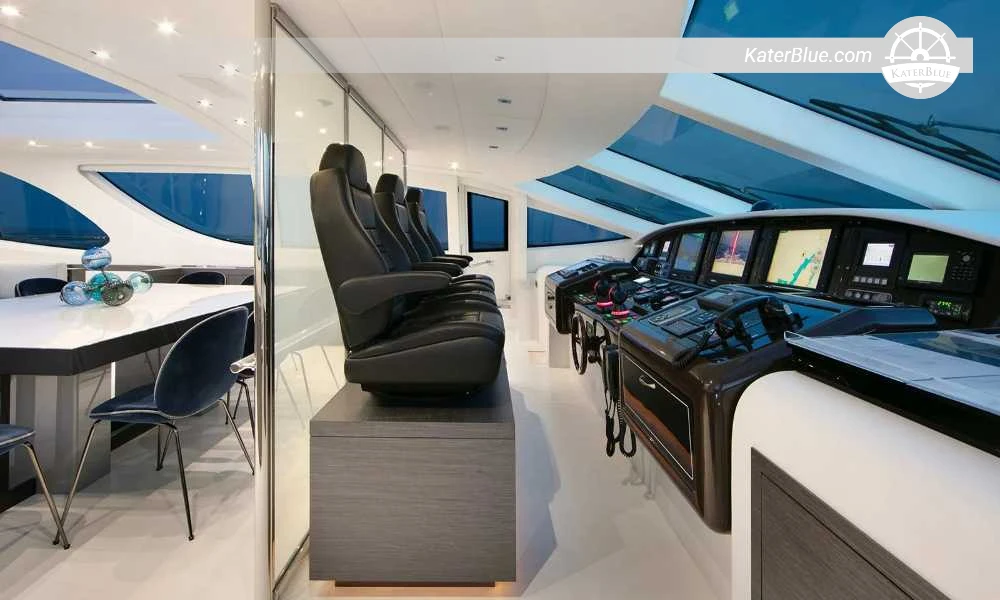
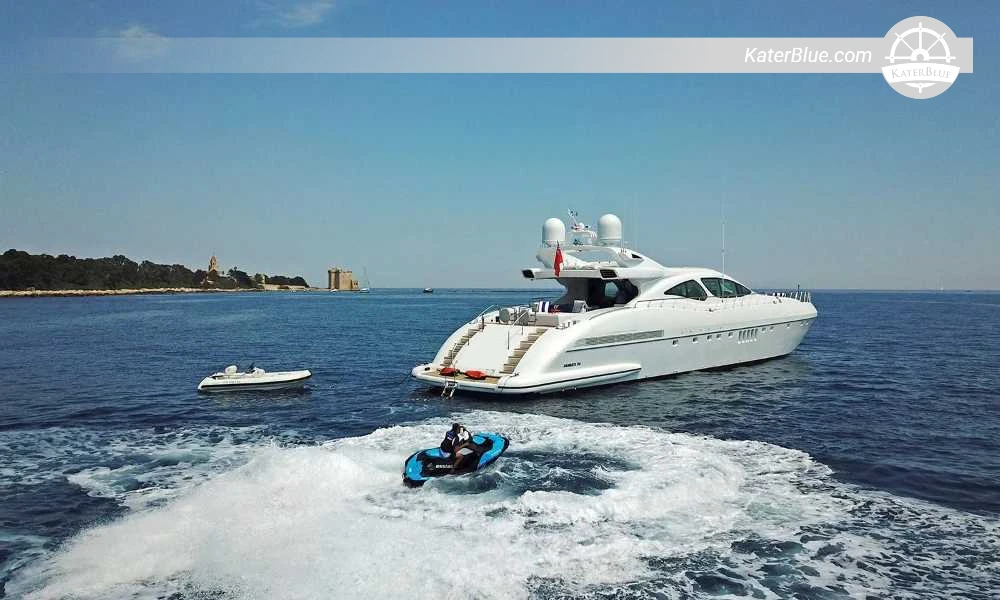
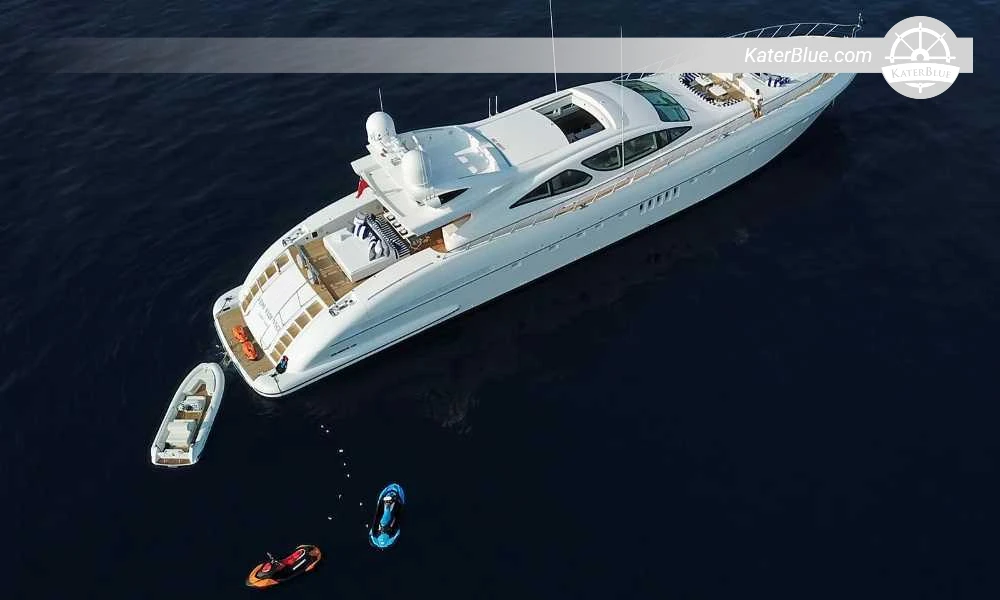
The planing hull form is central to the vessel’s identity, allowing the yacht to transition into high-speed operation and reach a stated maximum speed of 32 knots. The exterior profile is characterised by sleek, aerodynamic lines, a low superstructure and a sweeping aft section that creates a strong sense of movement even when the yacht is stationary. Oversized hull windows introduce natural light into the interior while maintaining the clean exterior profile, and the overall design balances aggressive performance styling with areas intended for relaxed cruising and entertaining. The foredeck is arranged around a substantial sunpad, creating a dedicated area for sunbathing and relaxation, while a forward dining arrangement with seating and a table provides a practical setting for informal meals with open views.
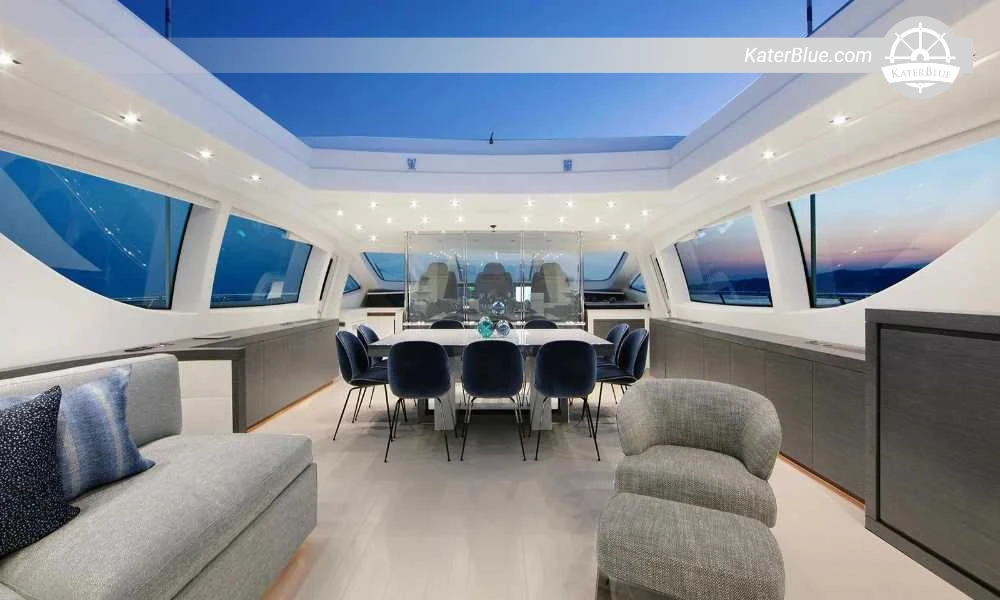
The aft cockpit adds another social area and connects directly with the swimming platform, creating a natural progression from the main deck to the water. An outdoor shower is provided for use after swimming or water activities. The supplied amenities also include air conditioning, sunpads, Wi-Fi and video-on-demand, supporting comfortable operation and onboard entertainment. One of the yacht’s defining exterior features is the retractable roof over the main saloon, which allows the interior to be opened to the sky and creates a more flexible environment between enclosed and open-air cruising. The combination of the retractable roof, large glazing, low-profile structure and open deck spaces gives the yacht a distinctive relationship between interior and exterior areas.
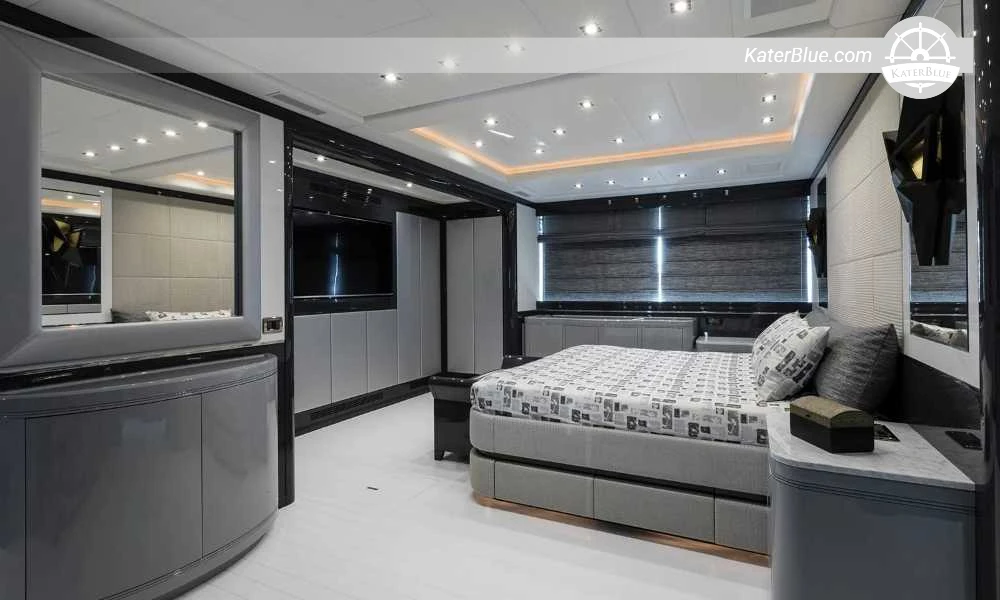
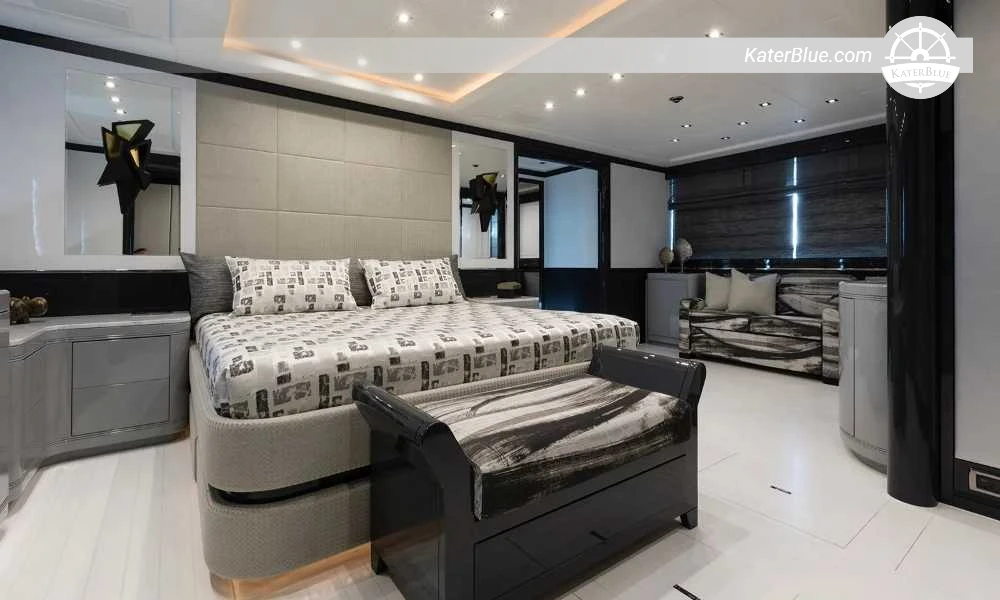
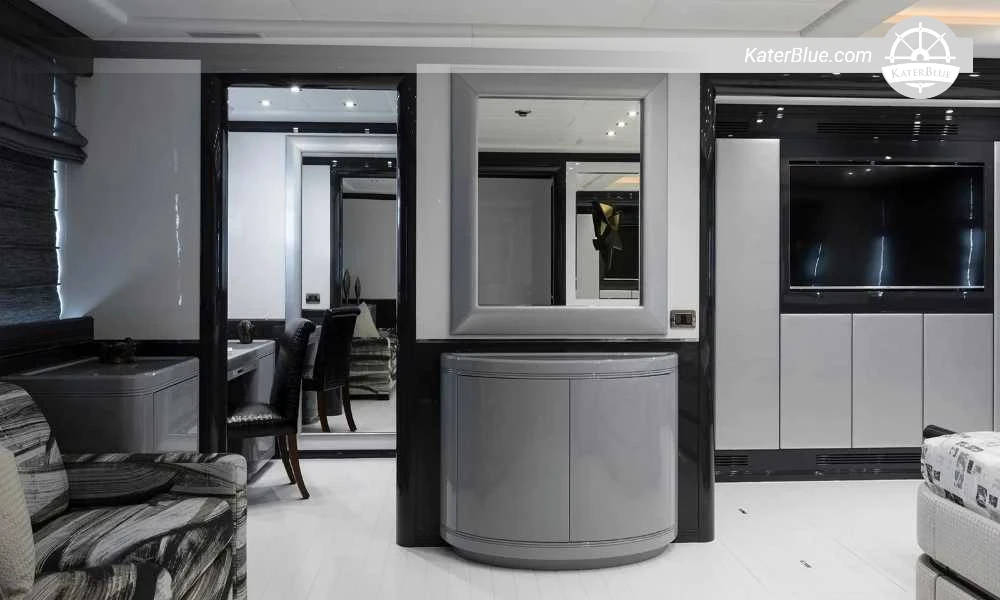
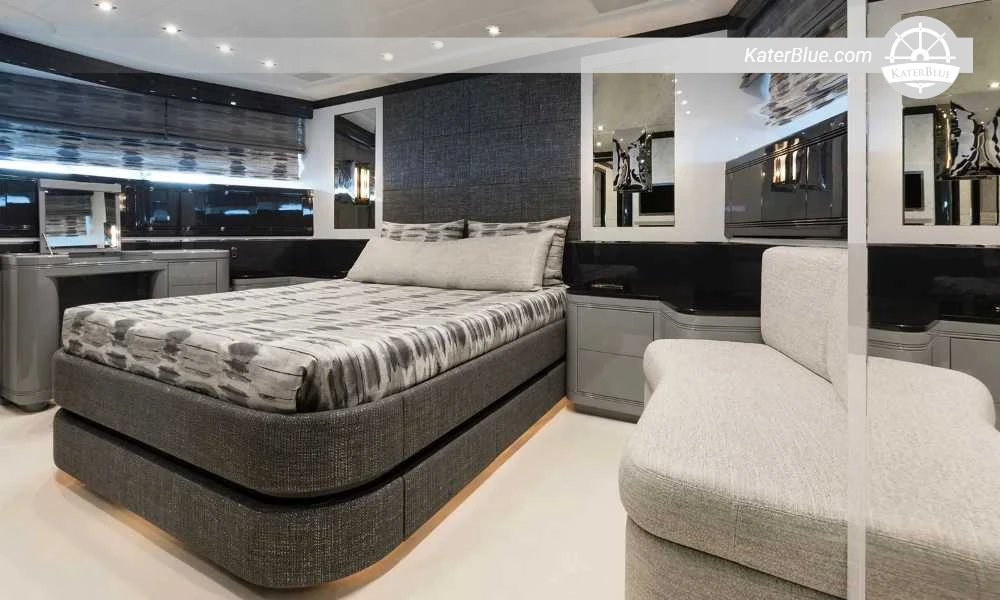
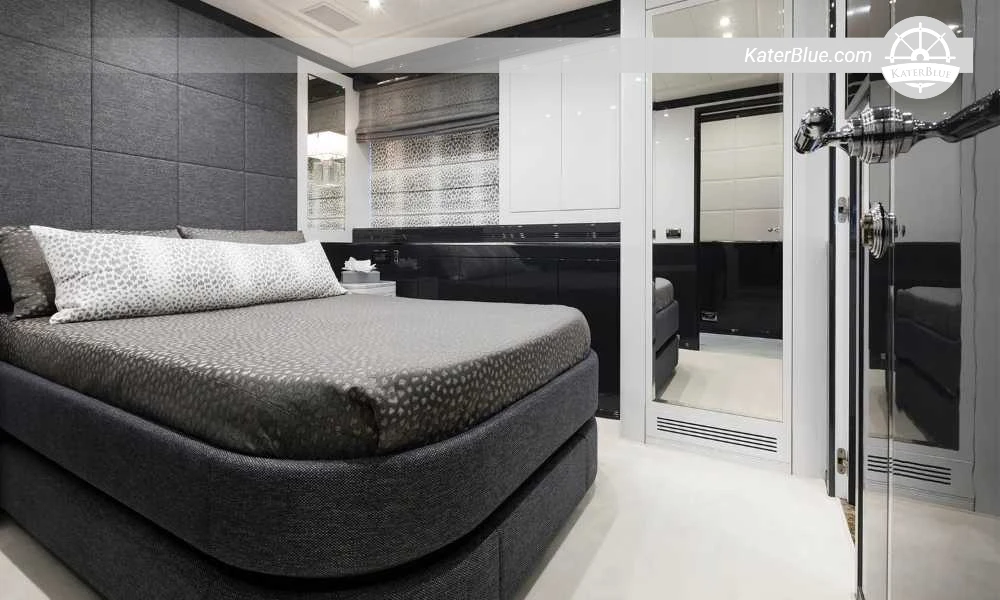
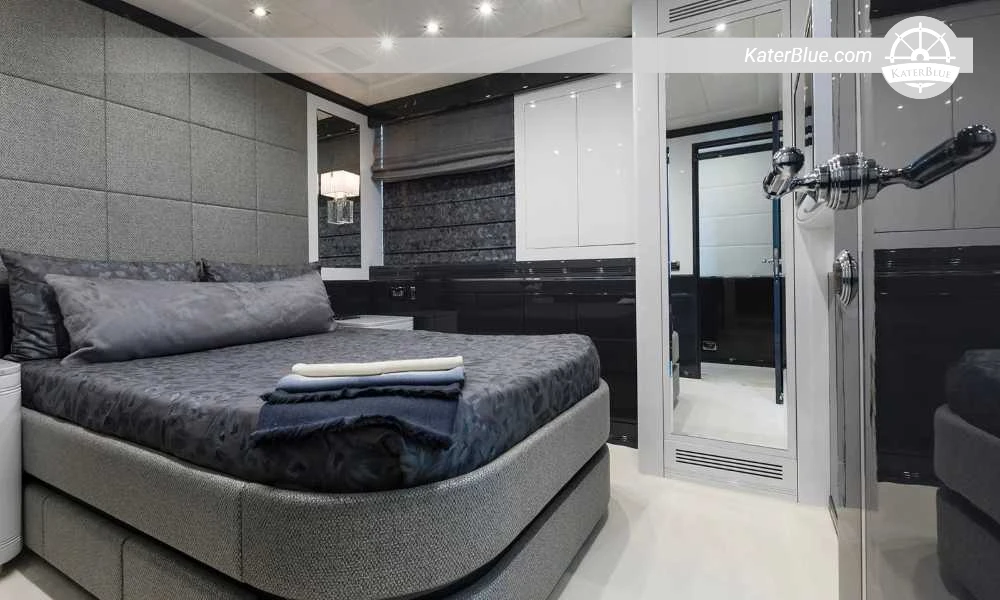
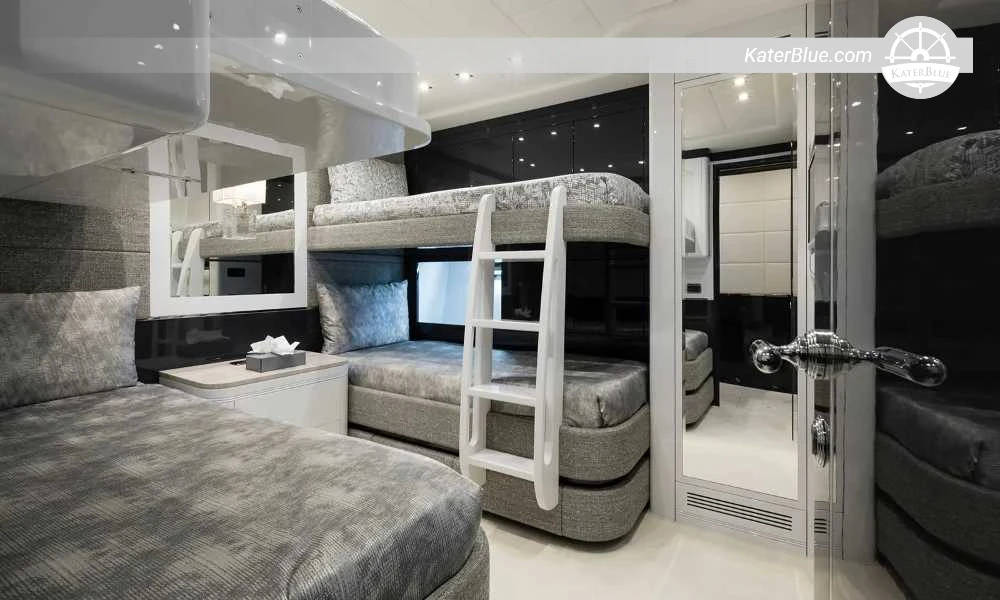
The principal accommodation is arranged for up to 10 guests in five cabins, comprising one owner’s cabin, one VIP cabin, two double cabins, one twin cabin and one Pullman berth. This arrangement provides a combination of private owner accommodation and flexible guest accommodation suitable for family cruising or entertaining groups. Crew accommodation is specified for six crew in three crew cabins, with a dedicated captain’s cabin, providing the operational capacity expected for a yacht of this size and performance. The supplied information does not provide the exact number of bathrooms, detailed berth dimensions, galley equipment, storage capacities or individual cabin layouts, so these details should be verified against the current general arrangement and during an onboard inspection rather than assumed.
Similarly, no classification notation, HIN/CIN, detailed construction specification or keel arrangement has been supplied. The hull is a planing GRP structure rather than a conventional displacement or semi-displacement platform, and its structural condition, laminate integrity, moisture readings and underwater areas should be assessed by an independent marine surveyor before purchase. The 2019 refit is confirmed in the principal characteristics, but the exact scope of the work has not been supplied, making the associated yard records, invoices and refit documentation important elements of the buyer’s due-diligence process.
Performance, Machinery & Systems
Performance is one of the yacht’s defining characteristics, with twin MTU 16V4000M90 diesel engines producing a stated 3,645 horsepower each and a combined output of 7,290 horsepower. The engines drive twin waterjets, creating a propulsion arrangement well suited to the yacht’s high-speed planing configuration and contributing to the clean underwater profile of the vessel. The stated maximum speed is 32 knots, with a cruising speed of 23 knots. The yacht carries 24,000 litres of fuel and 3,000 litres of freshwater. The principal characteristics list a range of 599 nautical miles at 34 knots; however, this figure requires verification because 34 knots exceeds the separately stated 32-knot maximum speed. The supplied key-features section also describes the yacht as having an approximately 400-nautical-mile range.
Because these range figures are inconsistent, buyers should rely only on a verified performance and fuel-consumption calculation based on the vessel’s actual engine data, loading condition and operating profile. The high-output twin MTU package provides substantial power for rapid cruising, while the planing hull is designed around high-speed performance rather than the low-speed economy associated with long-range displacement yachts. Actual fuel efficiency and range will depend on speed, sea conditions, displacement, hull condition, engine condition and onboard hotel loads, so the vessel’s current fuel-flow figures should be requested as part of the technical evaluation.
The supplied information does not identify engine hours, engine serial numbers, gearbox details, engine mounts, cooling-system configuration, fuel filters, exhaust arrangements or records of major engine overhauls. Those details should be established from the engine room, machinery logs and service records. Because the yacht uses twin waterjets, the waterjet manufacturer, jet model, impeller condition, steering and reversing systems, intake condition, hydraulic systems and service history should also be inspected carefully. The supplied specifications do not identify bow or stern thrusters, shafts, couplings, stern tubes, propeller systems or conventional rudder arrangements, and these should not be assumed because the yacht is equipped with waterjet propulsion.
No generator make, model, output, running hours or maintenance history has been provided, so generator capacity and condition must also be confirmed. The same applies to the electrical installation. Battery-bank capacity, electrical panels, breakers, inverter/charger equipment, transformers, shore-power connections and emergency electrical systems are not detailed in the supplied material and should be documented during the survey. The yacht is fitted with air conditioning, but the manufacturer, number of units, cooling capacity and service history are not provided. No separate heating system, dedicated noise-reduction package or specific soundproofing specification has been identified, so these features should be verified onboard rather than inferred from the yacht’s luxury positioning.
Navigation and communication equipment are also not itemised in the supplied specifications. Buyers should therefore establish the exact equipment fitted, including radar, GPS, AIS, autopilot, chart plotters, VHF, satellite communications, sonar and other bridge electronics, together with their manufacturers, models, installation dates, service records and operational condition. Wi-Fi and video-on-demand are confirmed amenities, but these do not by themselves establish the presence or specification of any particular navigation or satellite system. The vessel’s freshwater capacity is stated as 3,000 litres, but freshwater pumps, water heaters, watermakers, bilge pumps, holding tanks and grey- and black-water systems are not detailed. These systems should be inspected for capacity, condition, servicing and compliance.
Likewise, the supplied information does not identify fire-suppression equipment, extinguisher inventory, life rafts or expiry dates, emergency pumps or other safety equipment, making a full safety inventory and certification review an essential part of the purchase process. The vessel’s technical documentation should also be checked to establish whether all navigation and safety equipment is current, operational and appropriately certified for the intended use.
Accommodation, Comfort & Equipment
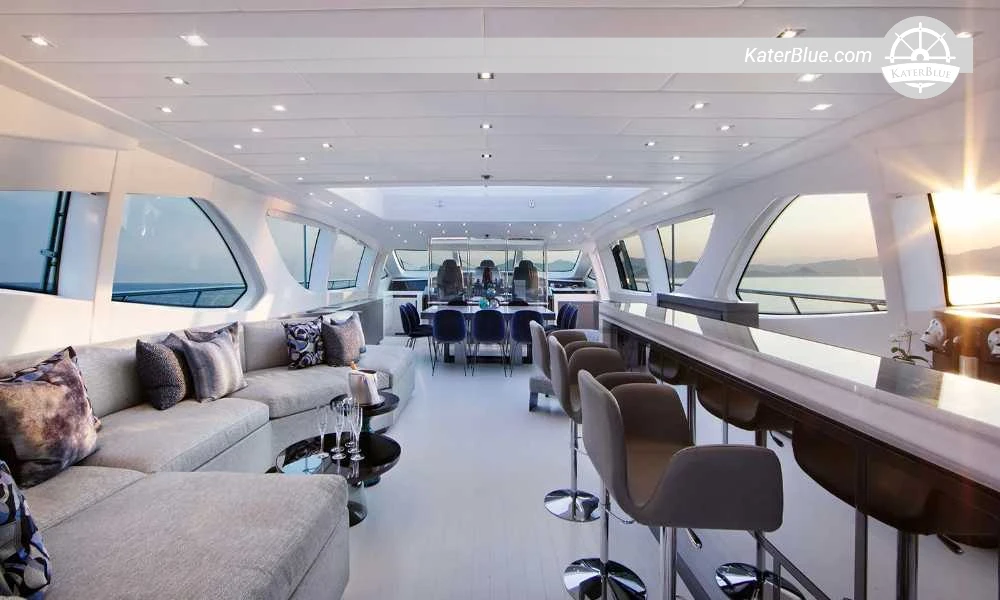
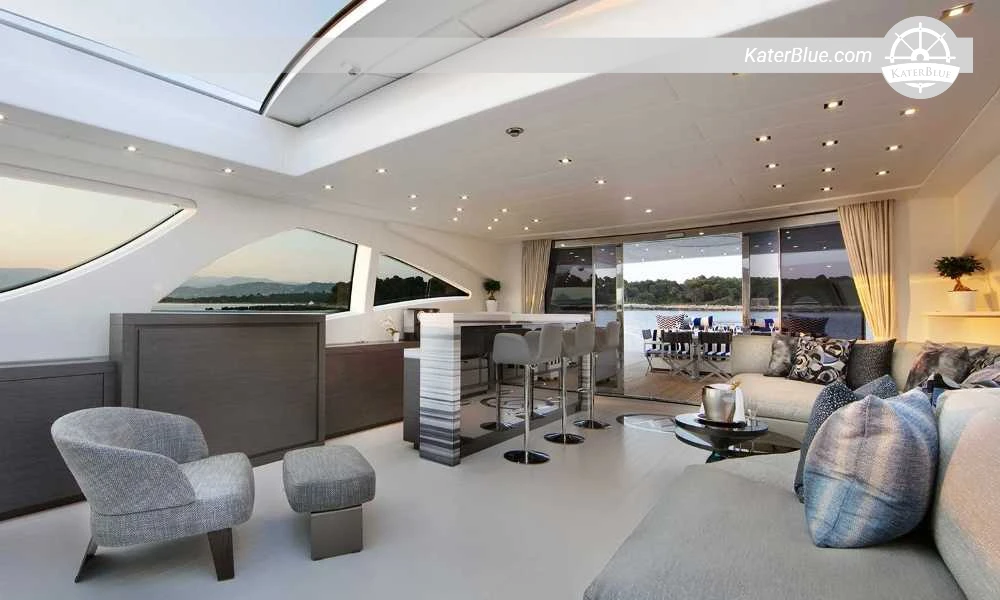
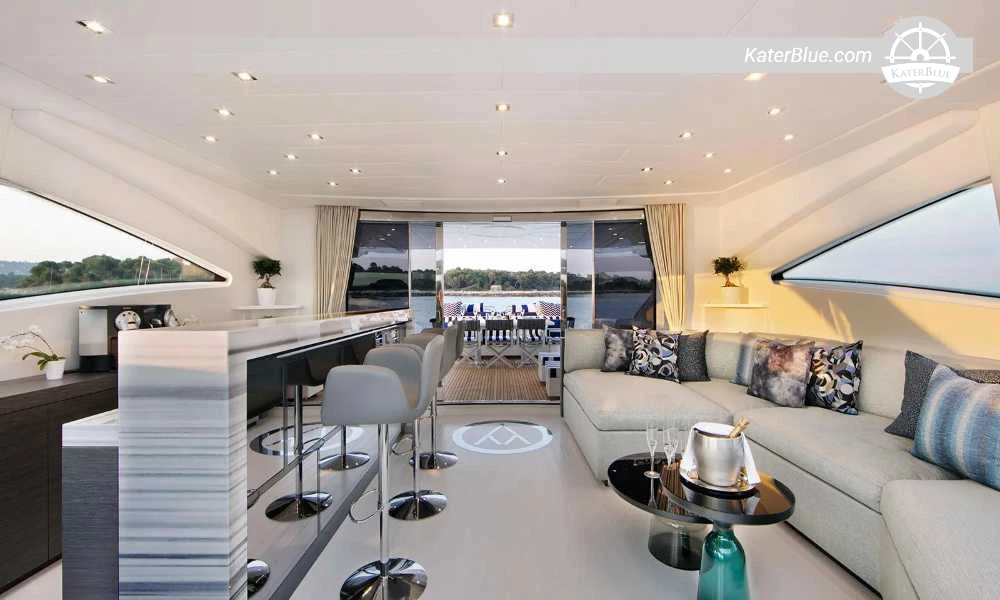
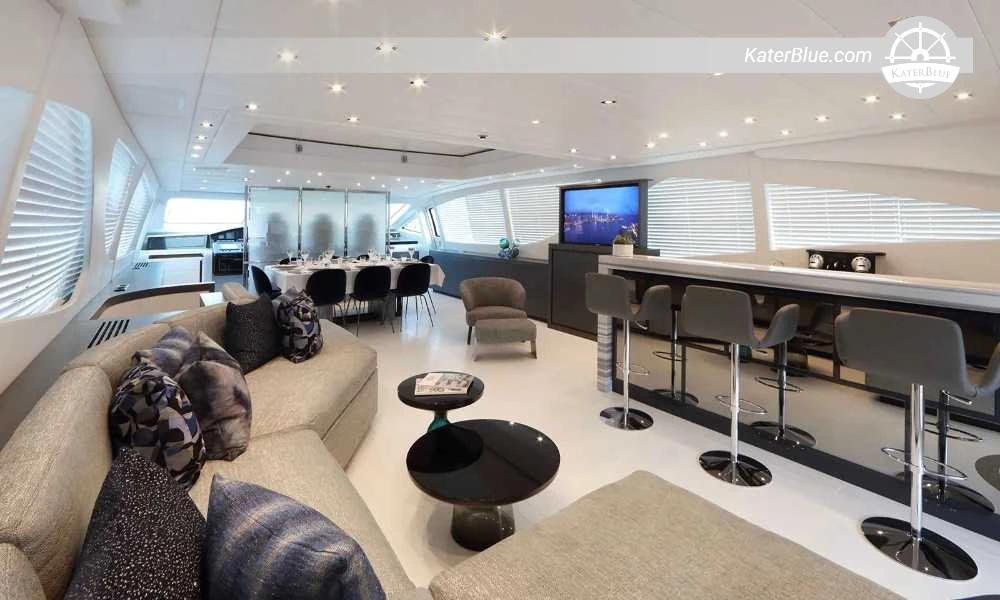
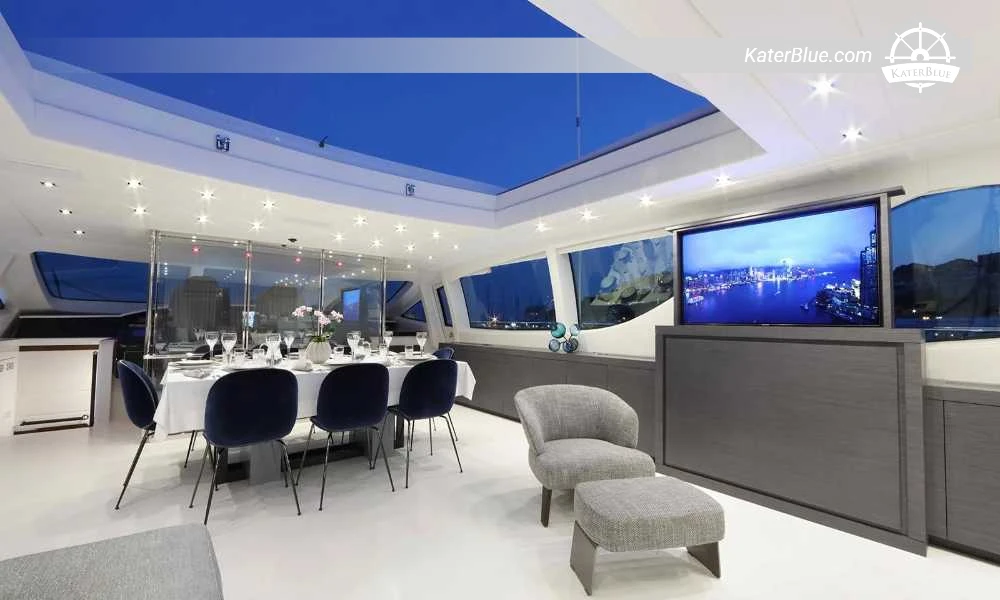
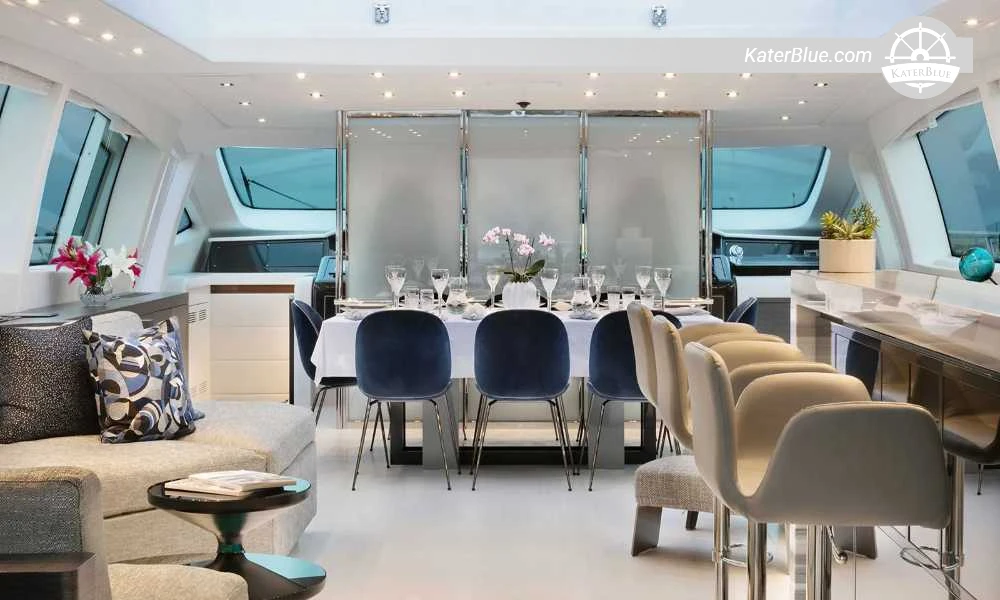
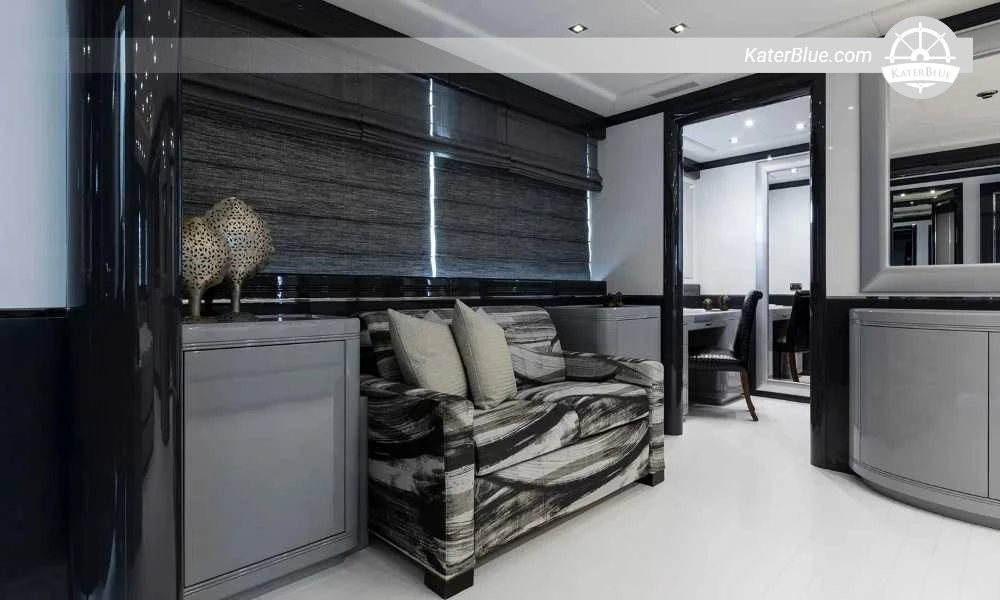
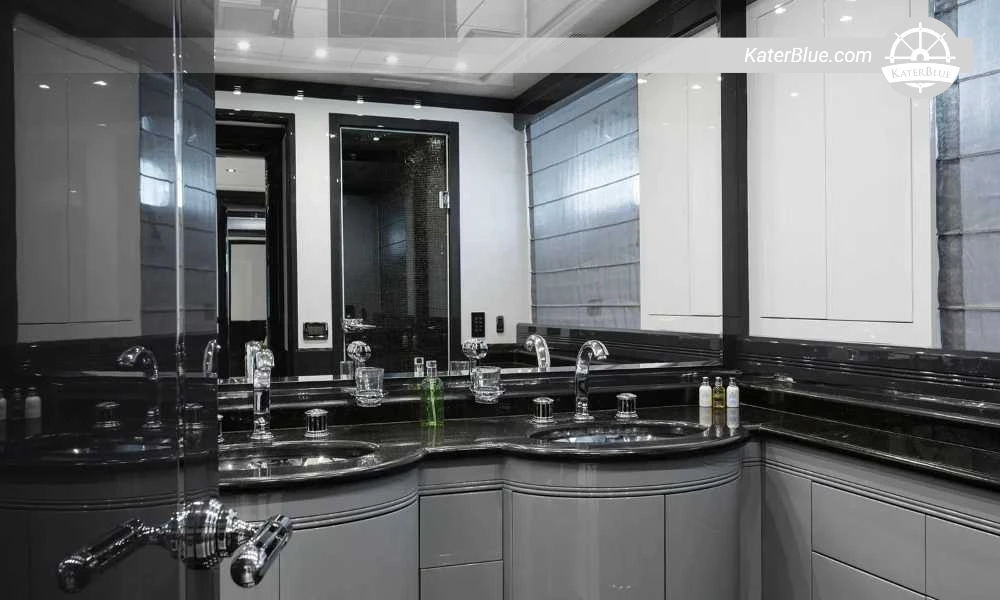
The interior is designed to complement the yacht’s performance-oriented exterior with a spacious and flexible main saloon focused on entertaining, dining and connection with the surrounding environment. The main saloon features a large curved sofa to port, a well-appointed bar to starboard and a formal dining area positioned forward. The retractable roof is a particularly important feature because it allows the saloon to transform from a conventional enclosed interior into an open-air living environment, increasing natural light, ventilation and the sense of connection with the sea. Large windows further enhance the interior environment and contribute to the yacht’s open and spacious character. The layout provides multiple opportunities for guests to relax, dine or socialise without requiring a large number of separate enclosed rooms.
The bar creates a dedicated serving and entertainment point within the saloon, while the forward dining area provides a more formal setting. The accommodation arrangement provides five guest cabins, with one owner’s cabin, one VIP cabin, two double cabins and one twin cabin with an additional Pullman berth. The combination allows the yacht to accommodate up to 10 guests according to the supplied principal characteristics, while the six-crew arrangement provides dedicated operational support. A captain’s cabin is also specified. The exact number and arrangement of guest and crew bathrooms have not been provided, so these should be confirmed through the current general arrangement and physical inspection.
The same applies to the galley, where no detailed information has been supplied regarding appliances, refrigeration, freezer capacity, storage, cooking equipment, ventilation or crew-service arrangements. Buyers should therefore request the current inventory and inspect the galley directly. Exterior living is a major component of the yacht’s appeal. The large foredeck sunpad creates a dedicated relaxation zone, while the forward seating area with table provides an alternative dining or social space. The aft cockpit offers additional seating and lounging and connects directly to the swimming platform, making movement between the yacht and the water straightforward. The swimming platform provides a practical launch and boarding area, complemented by an outdoor shower for rinsing after swimming.
Sunpads provide additional areas for relaxation, while the open-plan deck arrangement encourages movement between the forward and aft social spaces. The yacht’s shallow 1.35-metre draft may provide useful operational flexibility in suitable cruising areas, although actual access remains dependent on local depth, navigation conditions and marina requirements. A Williams Jet Tenders 545 Diesel Jet Tender is listed onboard. The supplied information does not provide the tender’s year, engine hours, service history or equipment inventory, so those details should be verified as part of the sale. No additional water-toy inventory is specified, and therefore no other toys should be treated as included unless they are confirmed in the final inventory. The same applies to spare parts, tools, additional equipment and onboard consumables.
The yacht’s air conditioning supports interior comfort, while Wi-Fi and video-on-demand provide onboard connectivity and entertainment. No specific heating system, lighting-control system, premium audio manufacturer, soundproofing specification or insulation package has been supplied, so these should be assessed directly. For prospective owners, the yacht’s combination of high-speed performance, shallow draft, open exterior spaces, retractable-roof saloon, substantial sunpads, swimming platform and flexible five-cabin arrangement provides a platform suited to private family cruising, entertaining and high-performance coastal cruising.
The yacht can also be considered for professionally managed or charter-oriented operation subject to applicable regulations, commercial certification, insurance requirements and the buyer’s intended jurisdiction, but no specific charter history or charter approval has been supplied and therefore none should be assumed. The 2019 refit is another important consideration, although its exact scope remains to be verified. Buyers should establish whether the work involved engines, waterjets, electrical systems, navigation equipment, air conditioning, interior spaces, hull coatings, teak decks, underwater equipment or other major systems.
The condition of the GRP hull, superstructure, teak decking, underwater surfaces and structural components should be established through survey, including moisture testing and inspection of areas around through-hulls and other underwater fittings.
Maintenance, Documentation & Purchase
From a purchase perspective, the yacht should be evaluated through a structured combination of technical survey, sea trial, documentation review and contractual due diligence. The principal characteristics identify the flag as Cayman Islands, but the supplied information does not include the registration number, current registration certificate, classification status, HIN/CIN, VAT status, import-duty status or detailed ownership history. These documents should be obtained and reviewed before completion. Buyers should not assume that VAT has been paid or that the yacht has a particular customs or tax status simply because the vessel is registered under a particular flag.
VAT, import duties, registration requirements and local operating taxes can depend on the buyer’s circumstances, intended flag and intended cruising or operating jurisdiction, so independent maritime and tax advice should be obtained before closing. The number of previous owners and the yacht’s detailed past usage have also not been supplied. Buyers should establish whether the vessel has been privately operated, commercially used or chartered, and should request supporting registration, management, maintenance and operational records where available. The 2019 refit should be supported by detailed yard documentation, invoices, work lists and equipment records, while any subsequent maintenance should be documented through service histories.
Particular attention should be given to the MTU main engines, waterjets, generators, electrical installation, air conditioning, hull and underwater areas. An independent professional marine survey is strongly recommended, covering the GRP hull and superstructure, structural condition, moisture levels, underwater areas, waterjets, steering and reversing systems, engines, generator, electrical systems, plumbing, air conditioning, navigation equipment, safety equipment, accommodation and deck equipment. A haul-out inspection should be considered to allow examination of the hull below the waterline, intakes, waterjet components, through-hulls, sea chests, underwater fittings and antifouling condition.
No antifouling date, underwater repair history or specific refit work to the hull has been provided, so these areas should be documented rather than assumed. A sea trial should also be arranged to evaluate acceleration, engine performance, waterjet operation, steering, vibration, temperatures, alarms, cruising speed and maximum achievable speed under appropriate conditions. Because the supplied range data contains an internal inconsistency, the sea trial and machinery documentation are particularly important for establishing realistic fuel consumption and range figures. The transaction should establish the agreed purchase price, deposit requirements, payment terms, survey provisions, sea-trial conditions, title-transfer requirements and closing procedures in a formal purchase agreement.
If escrow is used, the parties should agree the escrow structure and conditions for release of funds in advance. Any deposit should be governed by clear contractual terms addressing acceptance, survey results, documentation and completion. Delivery and handover arrangements should identify the delivery location and establish responsibility for insurance, fuel, crew, marina charges, relocation and other costs following completion. No information has been supplied confirming that relocation or delivery is included in the purchase price, so such services should not be assumed. No financing, leasing or transferable warranty arrangements have been supplied either, and any such arrangements would need to be separately agreed and documented.
The final inventory should clearly identify the Williams Jet Tenders 545 Diesel Jet Tender, onboard equipment, spare parts, tools and any other movable assets included in the transaction. Buyers should also verify the current registration and title documents, classification or technical certification, machinery records, maintenance history, refit documentation, safety certificates, insurance records and any available previous survey reports. The HIN/CIN or equivalent vessel identification should be physically reconciled with the official documentation.
As an open Mangusta 130, this 39.65-metre yacht brings together a distinctive Italian performance profile with twin MTU 16V4000M90 engines producing a stated 7,290 horsepower, twin waterjets, a 32-knot stated maximum speed, 23-knot cruising speed, 24,000-litre fuel capacity, five-cabin accommodation, six-crew capacity and a 1.35-metre draft. Her 265 GT volume, 145-tonne displacement, retractable-roof saloon, full-beam owner’s suite, VIP accommodation, expansive foredeck sunpad, forward dining area, aft cockpit, swimming platform, air conditioning, Wi-Fi and video-on-demand create a strong combination of performance and onboard comfort.
The 2019 refit adds an important point for investigation, while the current condition, machinery hours, service records, waterjet condition, navigation inventory, safety certification, tax position, ownership history and underwater condition should all be established through independent inspection and documentation. The supplied performance data should also be reconciled before publication because the stated 599-nautical-mile range at 34 knots does not correspond with the stated 32-knot maximum speed, and the separate approximately 400-nautical-mile range reference differs from the principal specification.
Subject to verification of these technical and documentary points, the yacht offers buyers a purpose-built high-performance platform with the combination of speed, shallow draft, substantial outdoor living areas and a flexible five-cabin layout that defines the Mangusta 130 concept.
Arrange a viewing of this 2006 Mangusta 130 in Nice to examine the waterjet propulsion, shallow draft and five-cabin interior. Request the supporting machinery, ownership and maintenance records, and agree the inspection and sea-trial arrangements with the seller.
Διαβάστε περισσότερα
Χαρακτηριστικά
Κατασκευαστής : Mangusta
Μοντέλο : Mangusta 130
Κατασκευασμένο έτος : 2006
Αριθμός καμπίνας : 8
Κρεβάτια : 16
Μήκος (μέτρα) : 39.65
Πλάτος (μέτρα) : 7.76
Βύθισμα (μέτρα) : 1.35
Μηχανή: σε HP : 2x 3645
Τύπος κινητήρα : 2x MTU 16V4000M90
Max Auth. Χωρητικότητα: 10
Χωρητικότητα δεξαμενής καυσίμου: 24000 ltr
Χωρητικότητα γλυκού νερού: 24000 ltr
Displacement (at full load): 145000
Max. Ταχύτητα (Kn) : 32.00 kn
Exterior Style & Concept: Maxine Tissenbaum
Interior_designer: Stefano Righini
Κατάσταση καταχώρισης
Κατασκευάστηκε Χώρα: Italy
Κατάσταση: Πλήρως λειτουργικό
Κατάσταση: Έτος πρώτης ταξινόμησης: 2006
Σημαία: Cayman Islands
Φόροι και άλλα απρόβλεπτα :
Εκκαθαρισμένο
Ασφαλιστικές λεπτομέρειες
- Η KaterBlue διασφαλίζει ότι όλα τα σκάφη που διατίθενται προς ενοικίαση είναι ασφαλισμένα από τους αντίστοιχους ιδιοκτήτες τους. Σας συνιστούμε να εξασφαλίσετε ταξιδιωτική ασφάλεια για την προστασία από τυχόν περιστατικά ή απώλειες που συμβαίνουν εκτός σκάφους. Ενώ οι ιδιοκτήτες των σκαφών παρέχουν ασφάλεια για τα σκάφη, τα γιοτ, το πλήρωμα και τους επισκέπτες τους έναντι πυρκαγιάς, συγκρούσεων και άλλων θαλάσσιων ατυχημάτων, οι επισκέπτες είναι υπεύθυνοι για την προστασία των τιμαλφών τους κατά τη διάρκεια της περιήγησης. Εάν το προτιμούν, οι επισκέπτες μπορούν να παραδώσουν τα πολύτιμα αντικείμενά τους στον καπετάνιο του σκάφους για φύλαξη. Σε περίπτωση ατυχήματος ή καταστροφής, είναι ευθύνη των καπετάνιων των σκαφών να ενημερώσουν αμέσως την KaterBlue ή τον εκπρόσωπό της. Εάν οι ιδιοκτήτες των σκαφών δεν έχουν ολοκληρώσει τις απαραίτητες ασφαλιστικές ρυθμίσεις, θα είναι πλήρως υπεύθυνοι. Οι ναυλωτές και οι επισκέπτες που επιθυμούν να συμμετάσχουν σε θαλάσσια σπορ το κάνουν με δική τους ευθύνη και θα πρέπει να διασφαλίσουν ότι έχουν τη δική τους ασφαλιστική κάλυψη.
Τοποθεσία

Ξεκινώντας:
£5,015,000
- {{total_price_html}}
- {{pay_now_price_html}}
REQUEST PRICE
Τιμή εκκίνησης πώλησης
£5,015,000