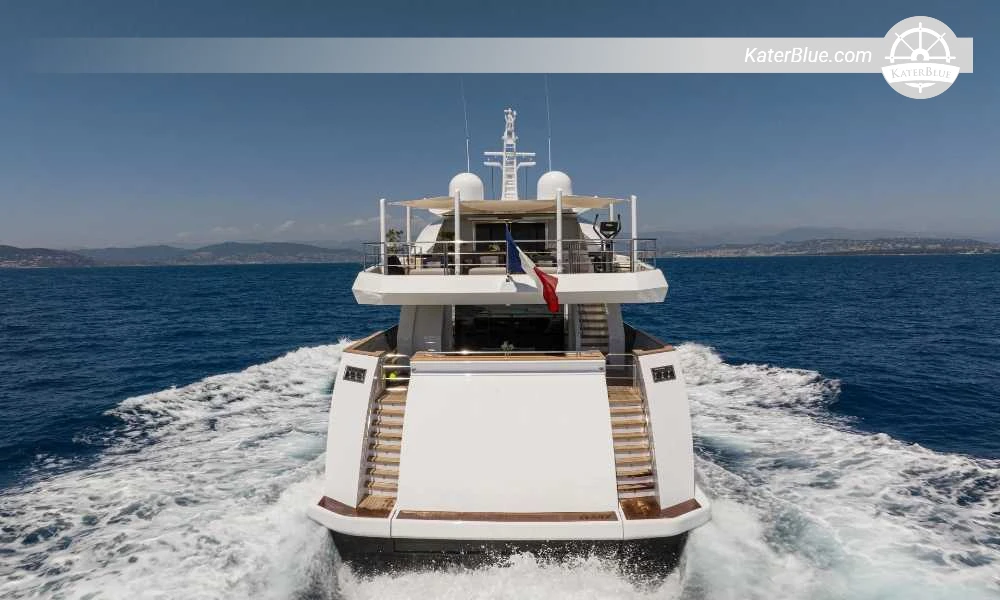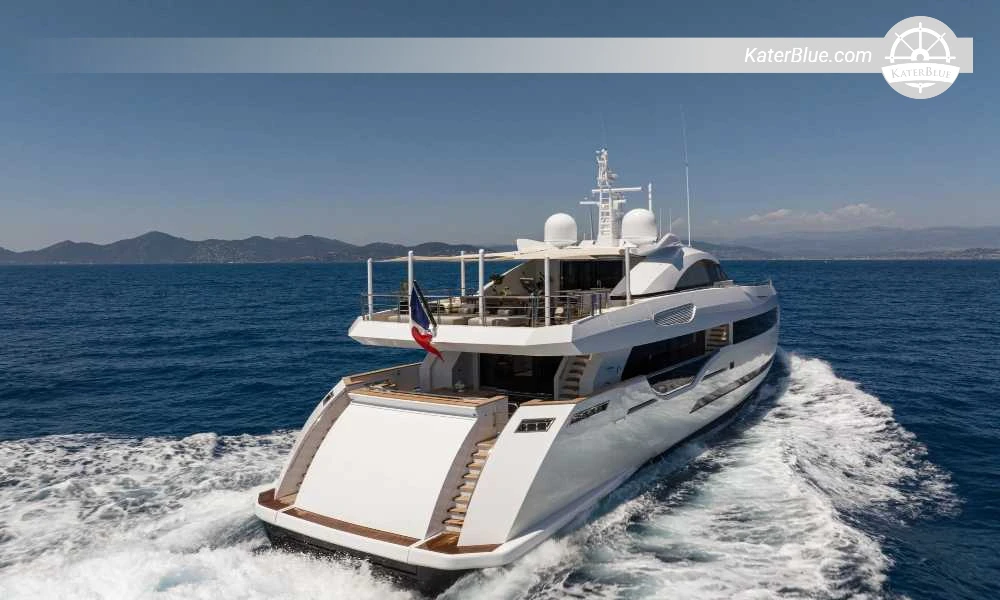
2015 Columbus Sport 40 MT Hybrid Motor Yacht for Sale, 40 m, Cannes
Cannes, France

Type vandscooter
Luksus yacht
Model
Sport 40 MT Hybrid
Byggeår
2015
Tilstand
Fuldt operationel
Beskrivelse
This 40-metre custom motor yacht represents a highly distinctive combination of Italian yacht construction, advanced hybrid propulsion, contemporary design and extensive outdoor living. Built by Columbus Yachts and delivered in 2015 following her launch in May of that year and subsequent sea trials, the yacht was refitted in 2022 and combines a semi-displacement aluminium hull with an aluminium superstructure, three teak-decked levels and a substantial 398 GT interior volume.
The hybrid equipment references and ratings need confirmation, including the units described as 45 HP/60 kW each. The principal twelve-person sleeping capacity also differs from the eleven berths accounted for by the detailed arrangement.
Listing Highlights
- Vessel: 2015 Columbus Sport 40 MT Hybrid
- Length overall: 40 m
- Listing location: Cannes
- Reported refit: 2022
Vessel Overview & Exterior
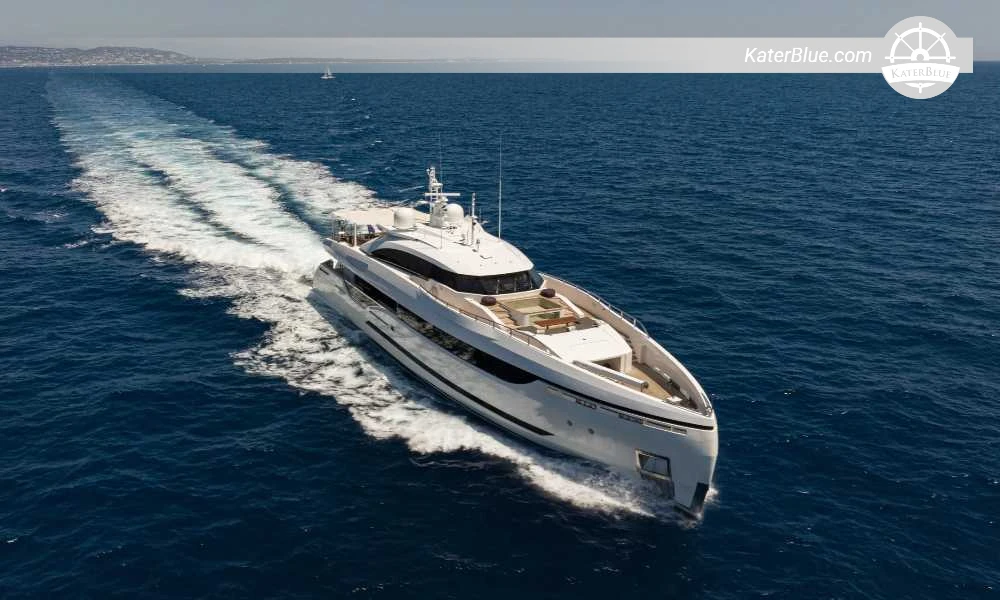
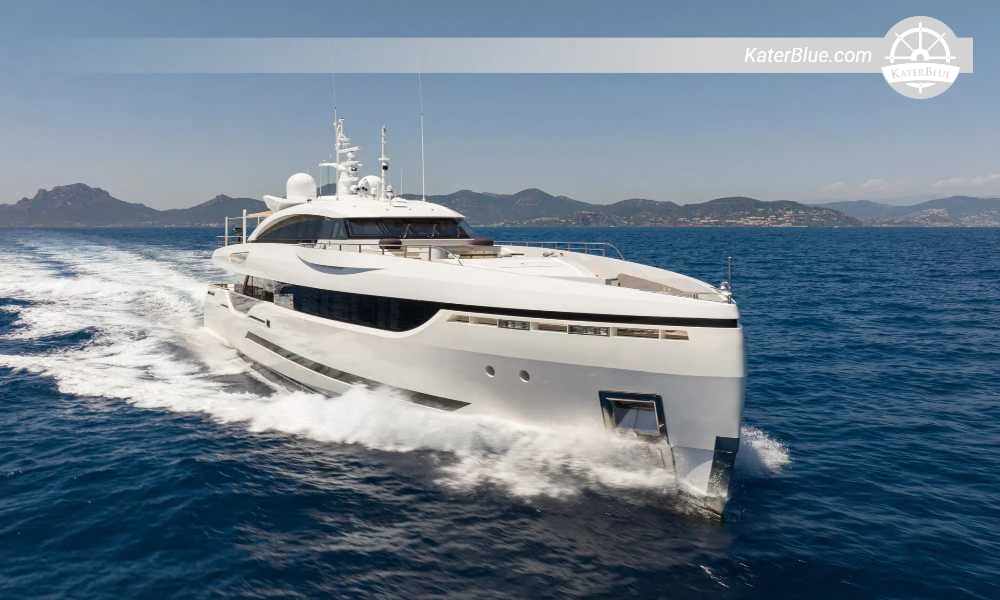
Her naval architecture and exterior design are by HydroTec, while the interior was created by Hot Lab, bringing together a sharp, performance-oriented exterior profile and a sophisticated contemporary interior. Measuring 40 metres overall with a 38.45-metre waterline length, 8.2-metre beam and 2.29-metre draft, she has been designed to provide substantial accommodation and entertaining space without losing the sleek proportions associated with a modern semi-displacement yacht. Her white aluminium hull and white aluminium superstructure are complemented by extensive glazing and a clean exterior profile, while the three-deck arrangement provides distinct areas for private relaxation, socialising and operational use. The yacht has a displacement of 249 tonnes and carries 41,800 litres of fuel and 6,400 litres of freshwater.
Her hull form and aluminium construction are particularly relevant to her performance profile, supporting the combination of speed and cruising capability that distinguishes this design. The exterior architecture incorporates a near-vertical bow, a low sweep through the superstructure and long areas of glazing, creating a streamlined appearance while maximising natural light throughout the accommodation. The yacht is also equipped with a teak deck, giving the exterior areas a refined finish suitable for both formal entertaining and relaxed barefoot cruising. A key feature of the design is the way the exterior spaces have been distributed across the vessel.
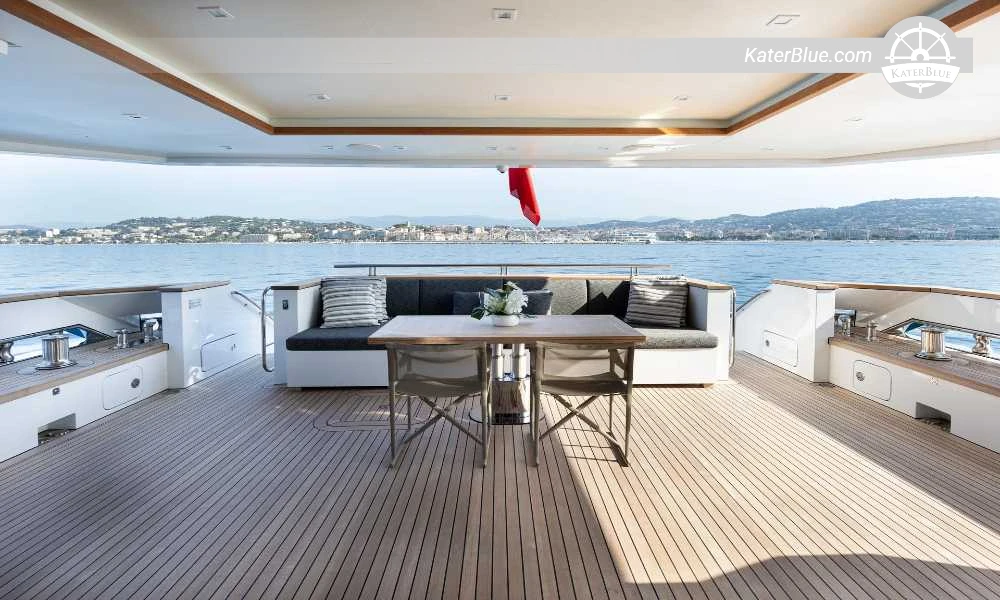
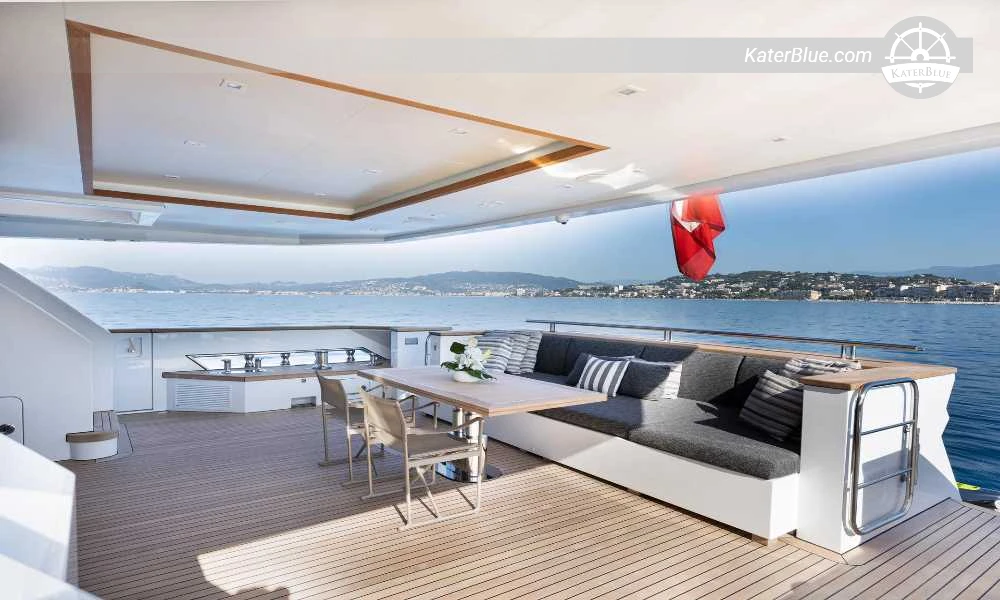
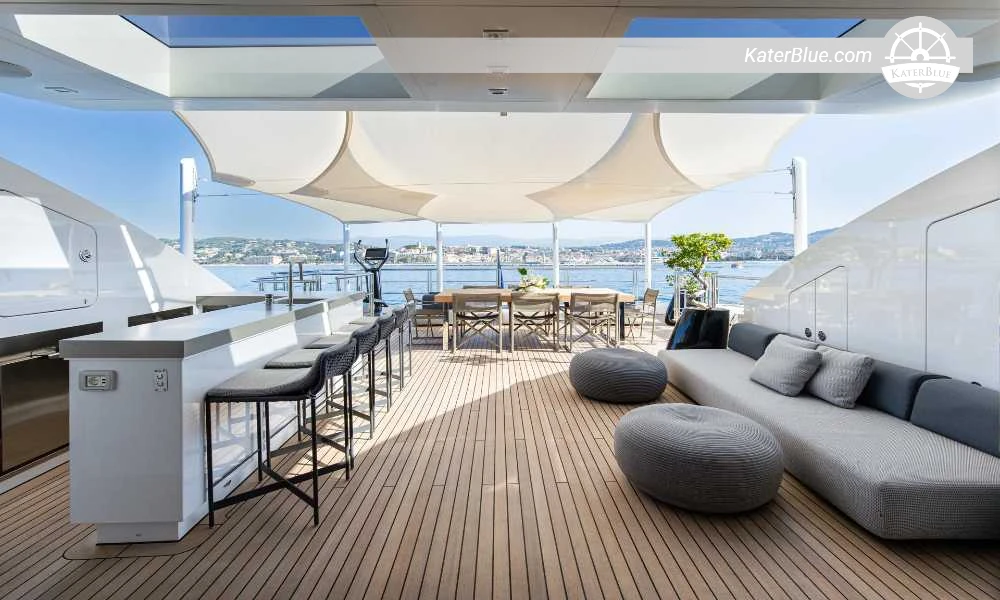
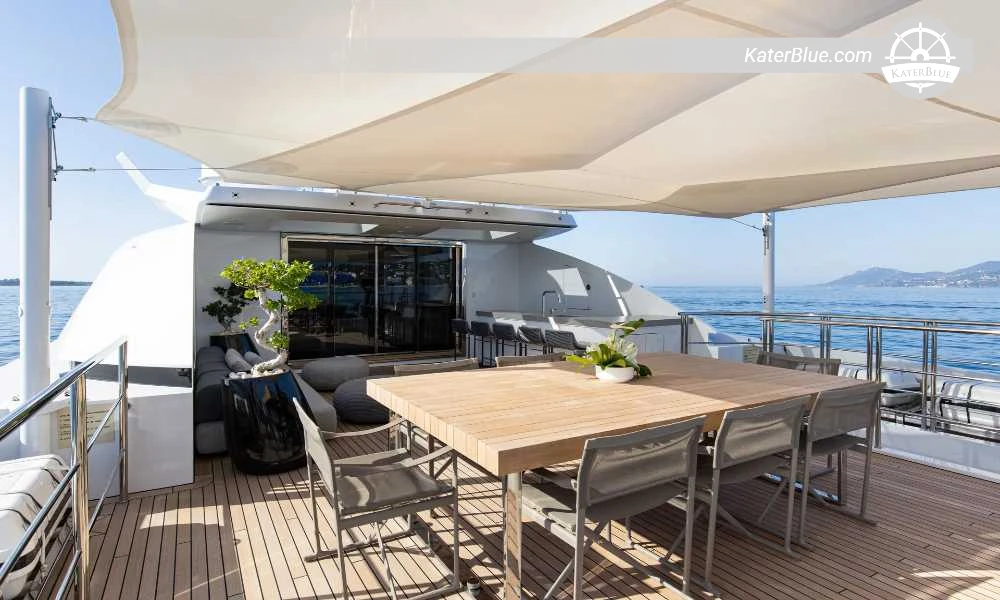
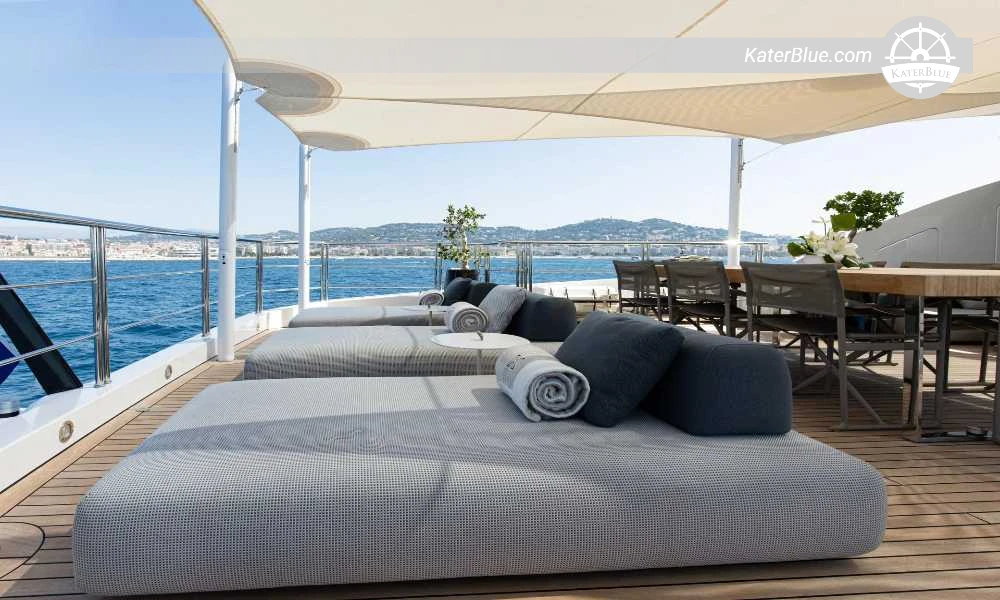
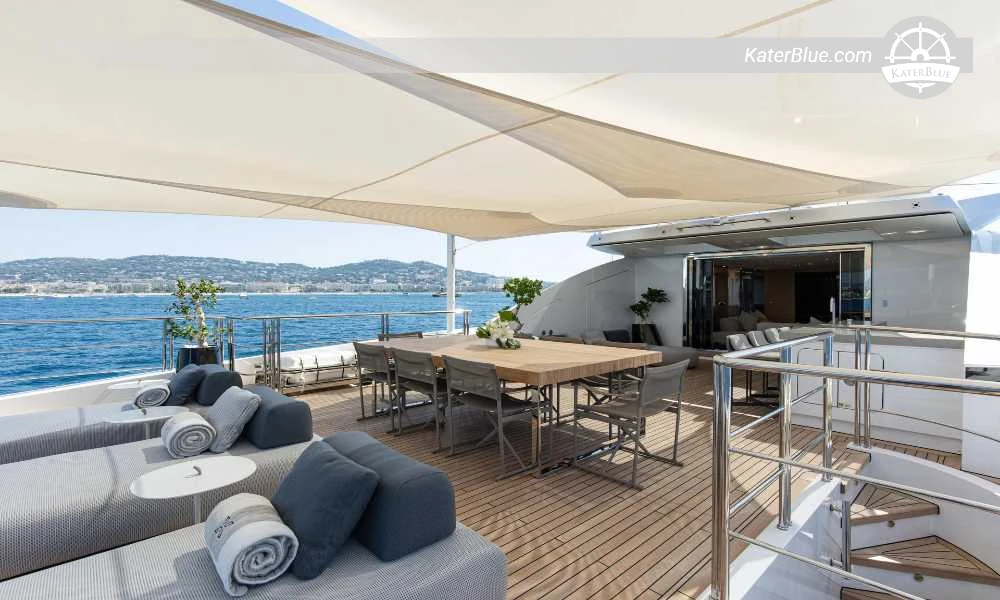
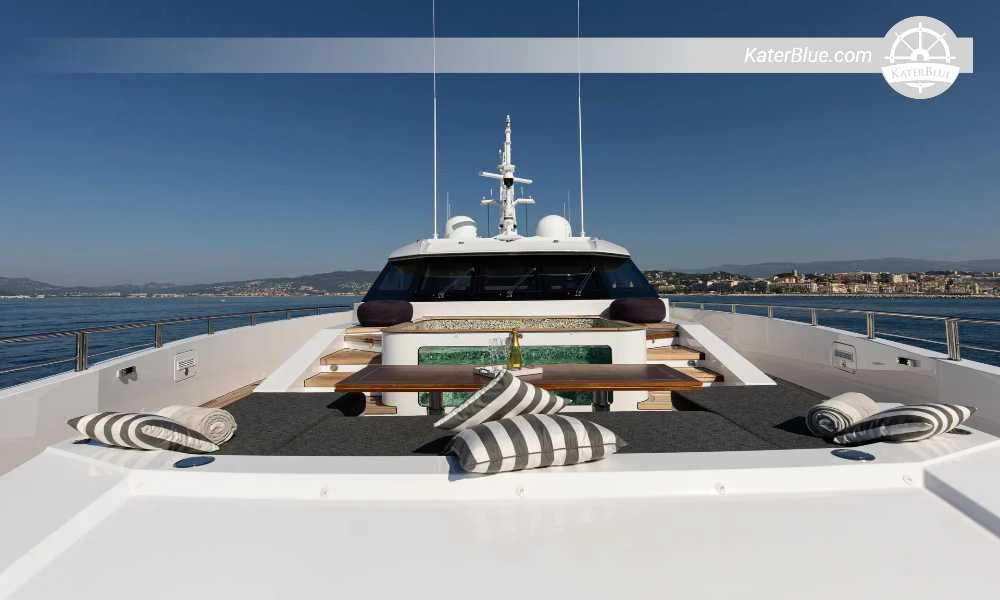
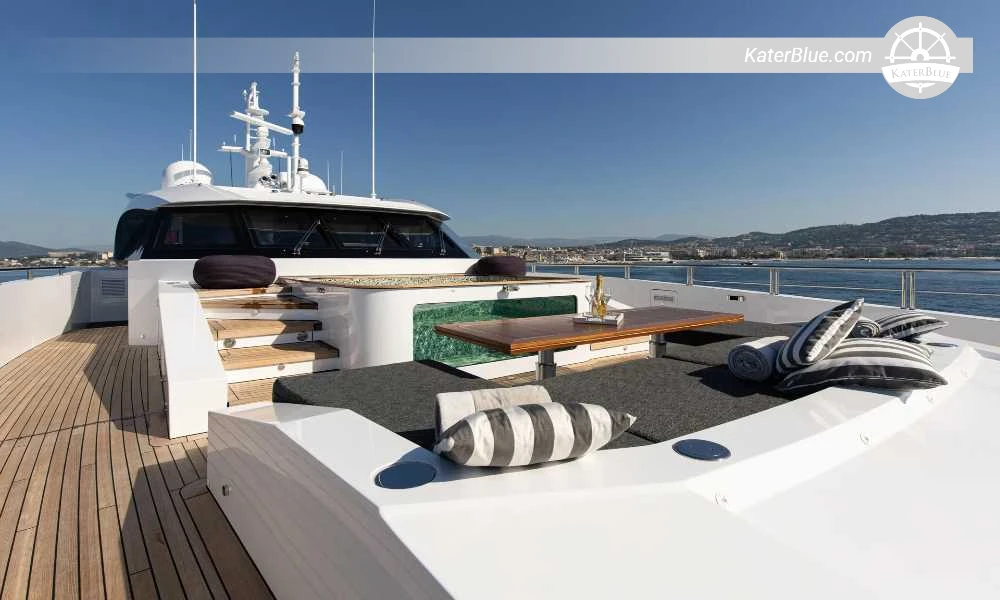
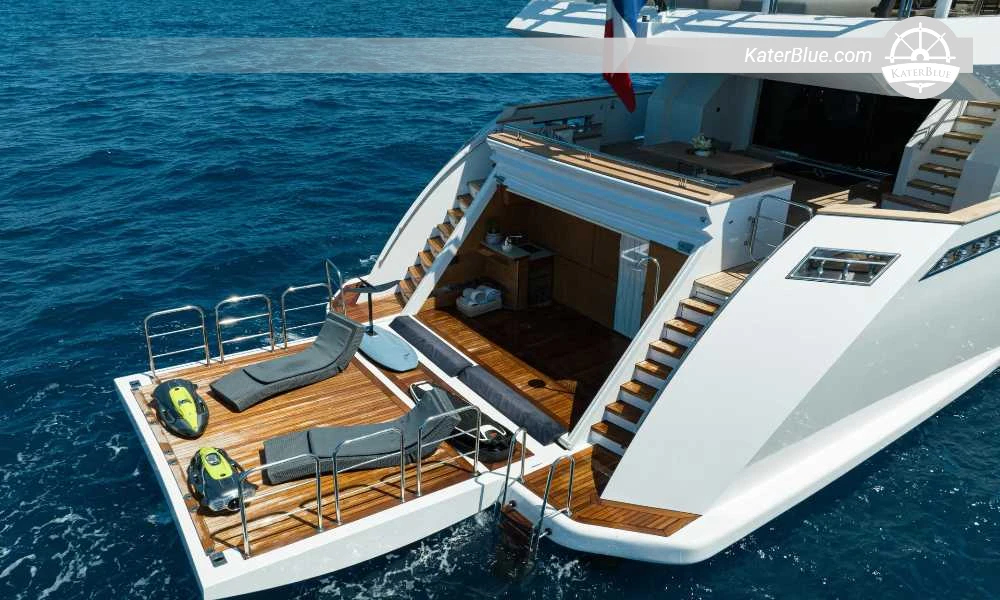
The aft main deck incorporates built-in seating and a fixed table suitable for dining or lounging, while the upper aft deck provides a larger open-air social area with a bar, dining table and sun loungers. The foredeck is designed as a dedicated guest area rather than simply a working space and incorporates a Jacuzzi, sunpads and loose seating. At the stern, the folding transom opens to create a beach club of approximately 15 square metres, with bar facilities, a head, showers and direct steps into the sea. The beach club provides a practical transition between the yacht and the water and is complemented by a swimming platform and outdoor shower. Tender handling is separated from this area through a side-launching tender garage, allowing the beach club to remain available for guests while the tender is deployed or recovered.
The yacht also carries a Williams 435 tender, while a crane is specified onboard for handling equipment. Amidships, the main saloon has sliding doors that open onto side decks incorporating drop-down balconies on both sides. These balconies extend the usable living environment toward the water and provide additional outdoor connection while the yacht is at anchor. The overall exterior arrangement therefore gives owners and guests several distinct environments, including the foredeck Jacuzzi area, main aft terrace, upper outdoor entertaining deck, side balconies and beach club, rather than concentrating all leisure activity in a single location. The supplied information identifies the vessel as flying the French flag.
Classification information, however, has not been provided and should be verified from the yacht’s current classification and statutory documentation. Similarly, the Hull Identification Number or Construction Identification Number, detailed construction certification, current class status and underwater structural history have not been supplied and should be confirmed as part of the pre-purchase documentation review. The available information confirms a 2022 refit but does not provide a complete itemised refit specification, so buyers should request the relevant invoices, work lists, warranties and service records to establish precisely which mechanical, electrical, structural, exterior and interior works were completed.
The yacht’s combination of aluminium construction, semi-displacement performance, substantial volume and multiple outdoor living zones makes her particularly relevant to buyers seeking a fast, contemporary 40-metre platform with both private-cruising capability and strong entertaining potential.
Performance, Machinery & Systems
The yacht’s propulsion package is a major part of her technical appeal, combining conventional diesel power with a hybrid diesel-electric arrangement. The supplied principal specifications identify two MTU 12V 2000 M94 diesel engines, each rated at 1,920 horsepower or 1,432 kW at 2,450 rpm, giving 3,840 horsepower from the principal diesel engines. The same specifications identify two General Electric diesel-electric units, each stated at 45 horsepower or 60 kW, bringing the listed total system output to 3,930 horsepower or 2,984 kW. The descriptive material supplied for the yacht identifies the hybrid system as a Siemens EcoProp system and explains that the electric motors are integrated with the propulsion system.
Because the supplied technical information contains different references for the hybrid equipment and its output, the exact manufacturer, model, individual motor rating and current configuration should be verified against the vessel’s technical documentation before purchase rather than assuming one specification is definitive. The documented propulsion arrangement is twin screw propellers, with the hybrid architecture designed to provide different operating modes depending on cruising requirements. According to the supplied description, the system can allow low-speed electric operation, with the main MTU engines shut down when suitable electrical power is available, supporting reduced noise and vibration during appropriate low-speed use.
Under diesel operation, the electric machinery can also be used within the propulsion and energy-management system, while a boost configuration can combine conventional diesel propulsion and electric assistance when maximum performance is required. This gives the yacht a wider range of operating possibilities than a conventional diesel-only installation and is particularly relevant to buyers interested in lower-noise operation, improved flexibility and efficient use of onboard energy. Her documented maximum speed is 20 knots, with a cruising speed of 15 knots. A range of approximately 3,300 nautical miles is stated at 12.5 knots from the 41,800-litre fuel capacity.
The published range should be regarded as a stated operating figure rather than a guaranteed result, as actual range depends on loading, sea conditions, hull condition, engine condition, weather, selected propulsion mode and operating profile. The semi-displacement aluminium hull and twin-screw configuration are designed to support the yacht’s relatively high maximum speed while retaining the ability to undertake longer passages. Stabilizers are specified both underway and at anchor, improving comfort across different operating conditions. A bow thruster is also fitted, assisting low-speed manoeuvring and marina handling. The technical information provided does not identify a stern thruster and therefore one should not be assumed.
Likewise, detailed information regarding propeller dimensions, shaft material, shaft seals, couplings, stern tubes, rudder configuration and steering machinery has not been provided and should be inspected and documented before purchase. Engine serial numbers, engine hours, gearbox specifications, engine mounts, cooling systems, fuel filters, exhaust arrangements and detailed service history have also not been supplied. These are essential components of a professional pre-purchase machinery inspection and should be reconciled against the vessel’s maintenance records. Generator make, model, output and operating hours have not been specified either.
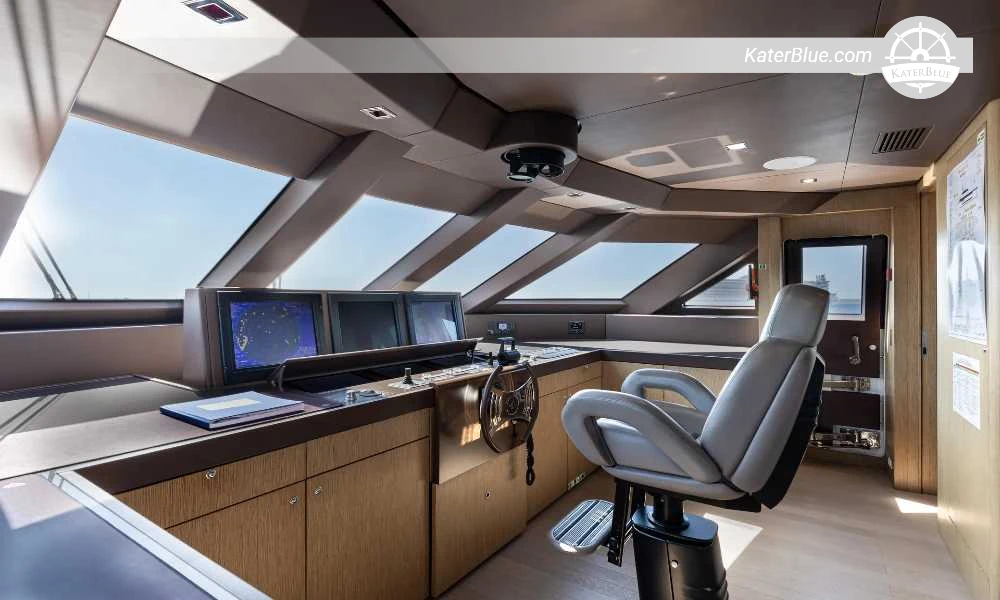
The electrical system should therefore be reviewed in detail, including battery banks, electrical distribution panels, breakers, inverter and charger equipment, shore-power connections and the integration between the hotel electrical system and the hybrid propulsion system. The yacht’s hybrid architecture makes this inspection particularly important because the buyer should understand the current condition, service history and operating parameters of both the conventional propulsion equipment and the electric propulsion components. The available information confirms Starlink, Wi-Fi and Satcom, providing a strong connectivity platform for modern onboard operations, while the full navigation inventory should be established during the technical inspection.
Individual specifications for radar, GPS, AIS, autopilot, chart plotters, sonar and VHF equipment have not been provided and should therefore be verified rather than assumed. The same principle applies to security systems, CCTV, alarms and other electronic systems. The yacht’s 2022 refit should also be reviewed in relation to these systems to determine which equipment was renewed, upgraded or retained. For a prospective buyer, the hybrid propulsion package, 20-knot maximum speed, 15-knot cruising speed, stated 3,300-nautical-mile range and stabilisation system create a compelling technical profile, but the final purchase decision should be based on documented machinery condition, survey results, sea-trial performance and verification of the current hybrid system configuration.
Accommodation, Comfort & Equipment
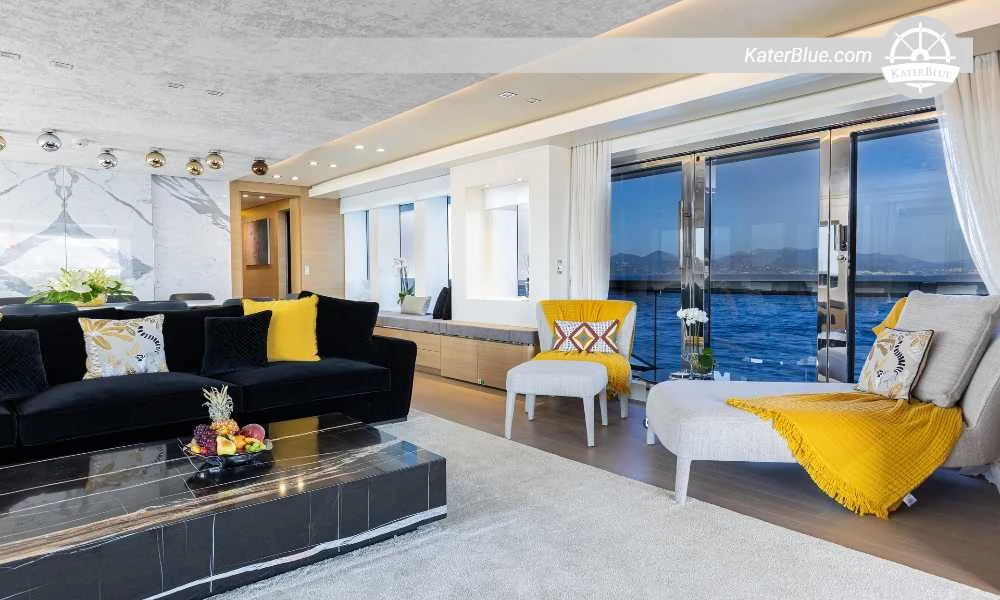
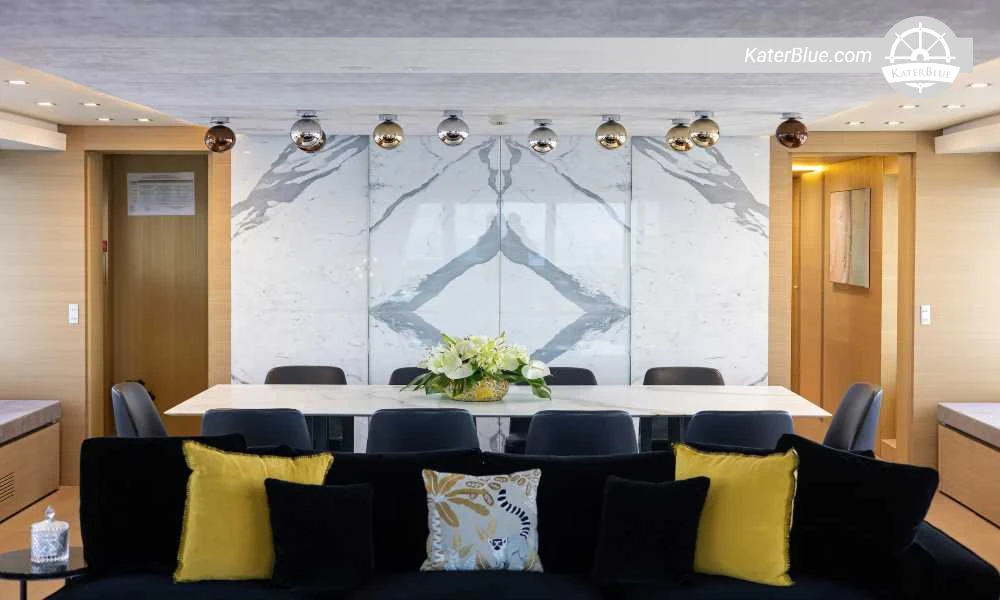
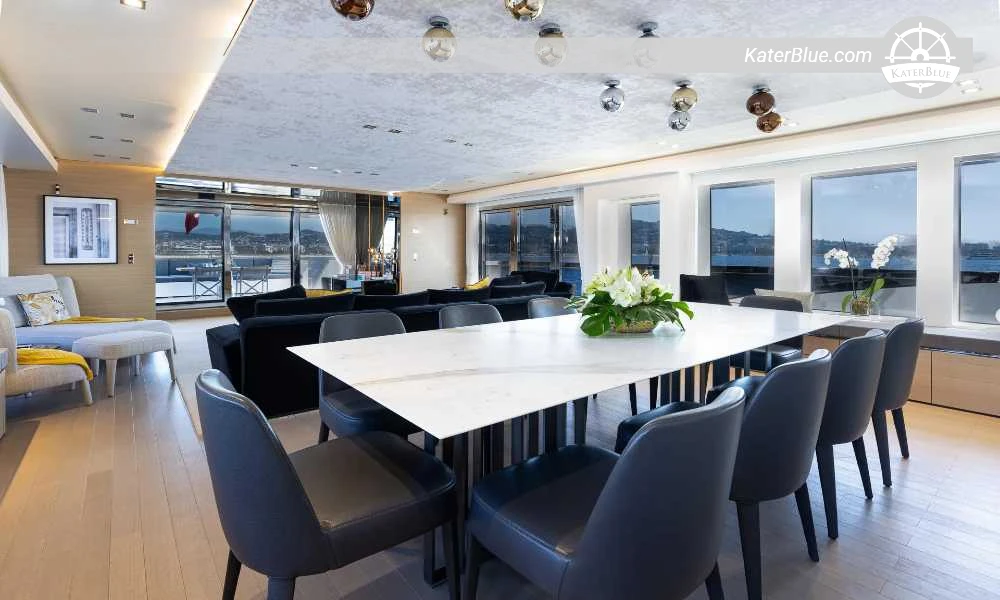
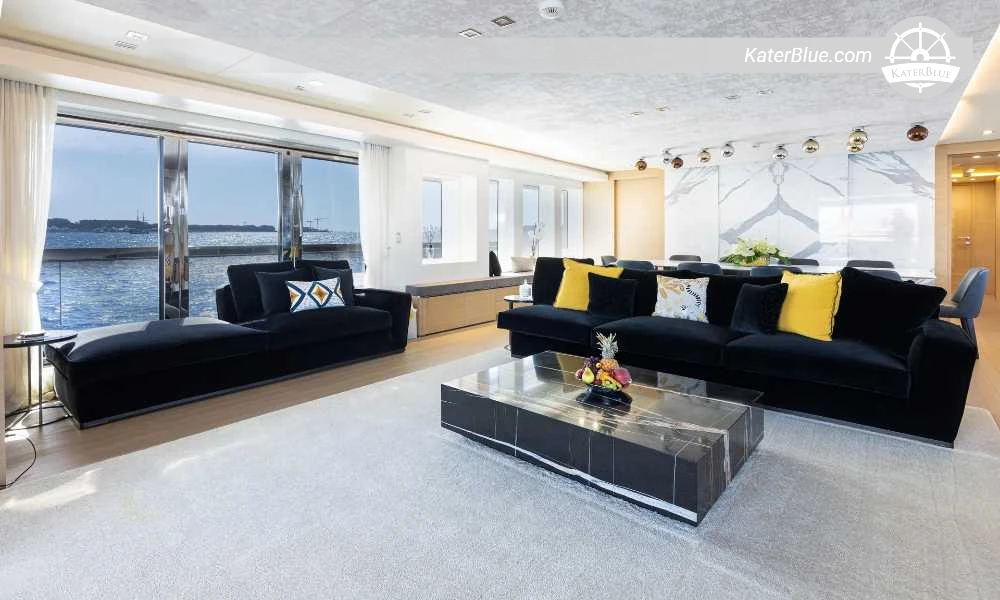
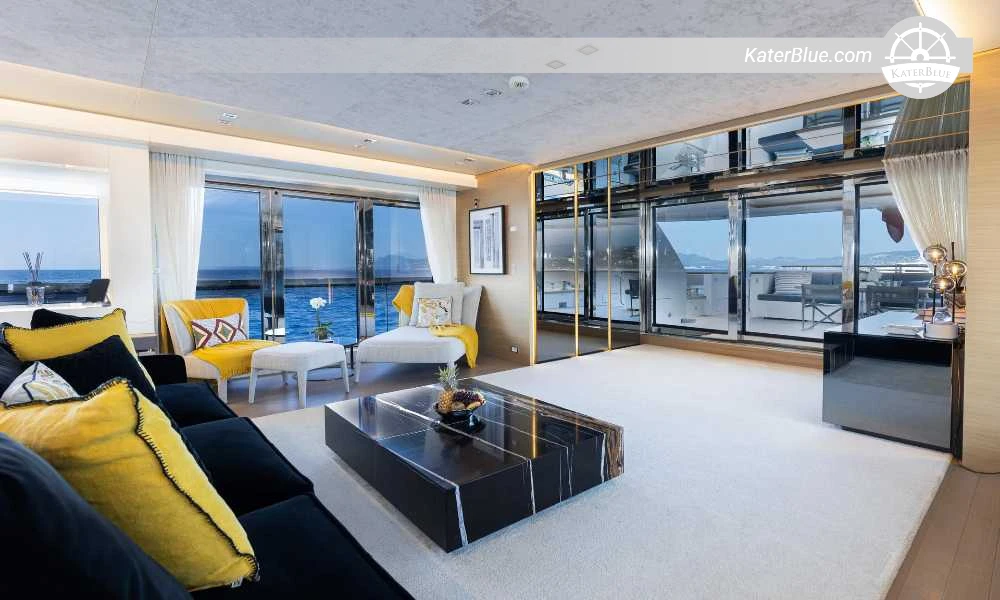
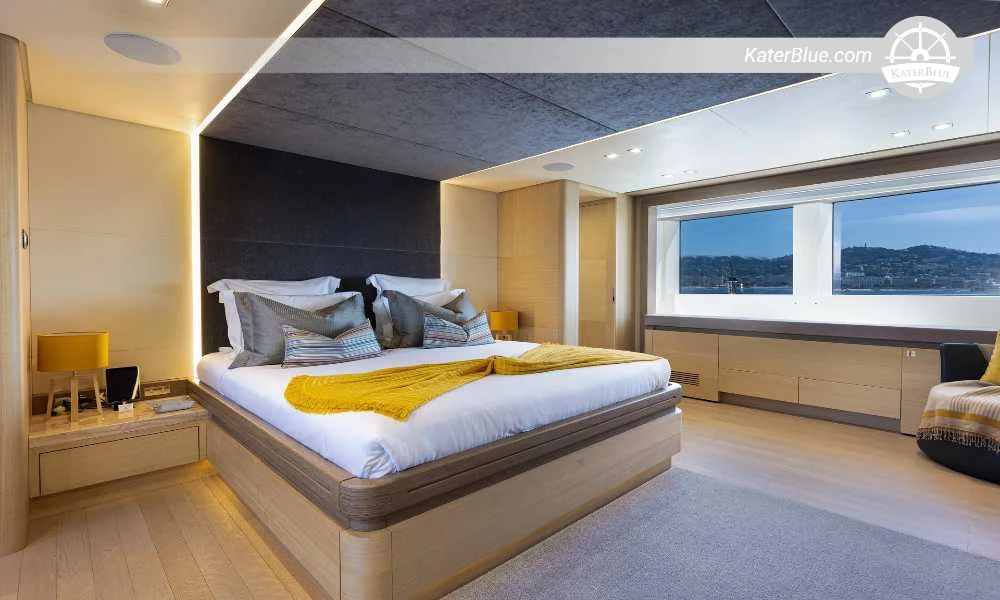
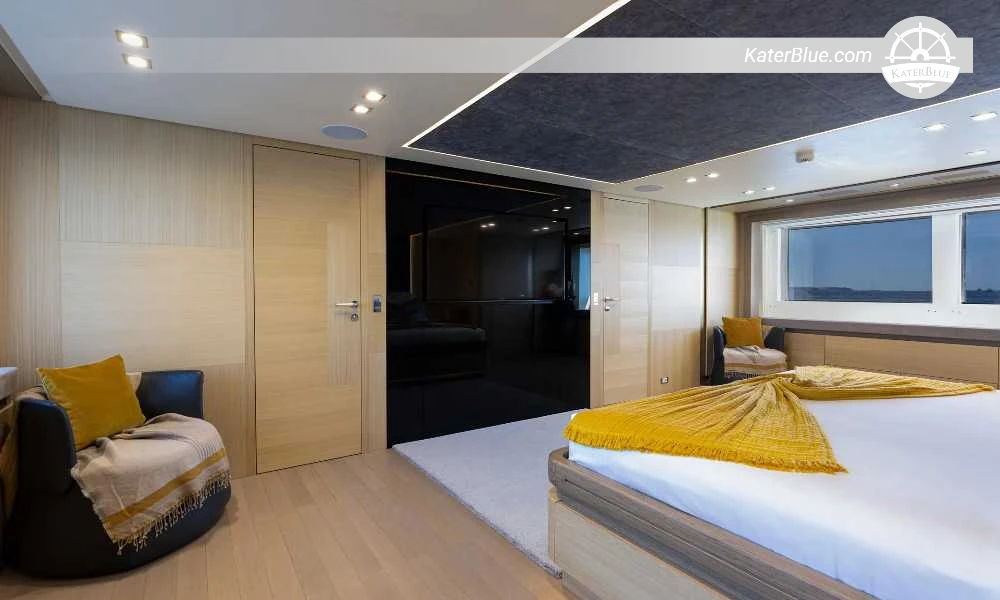
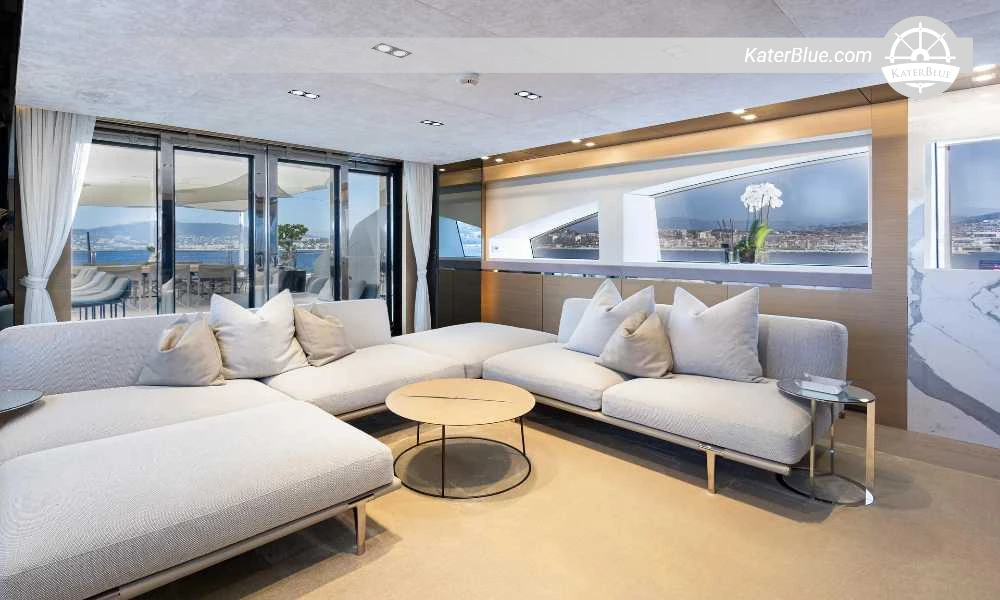
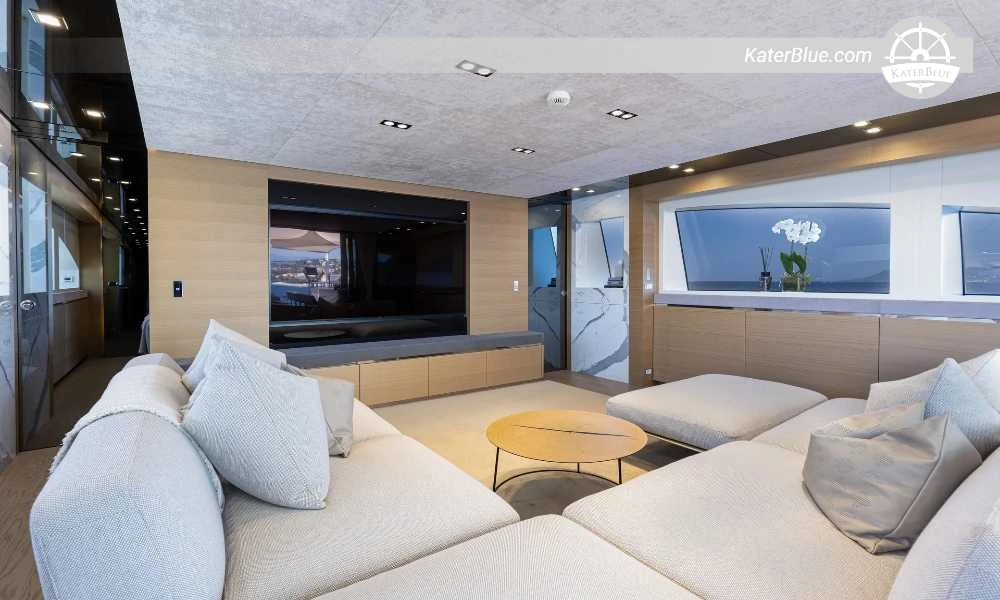
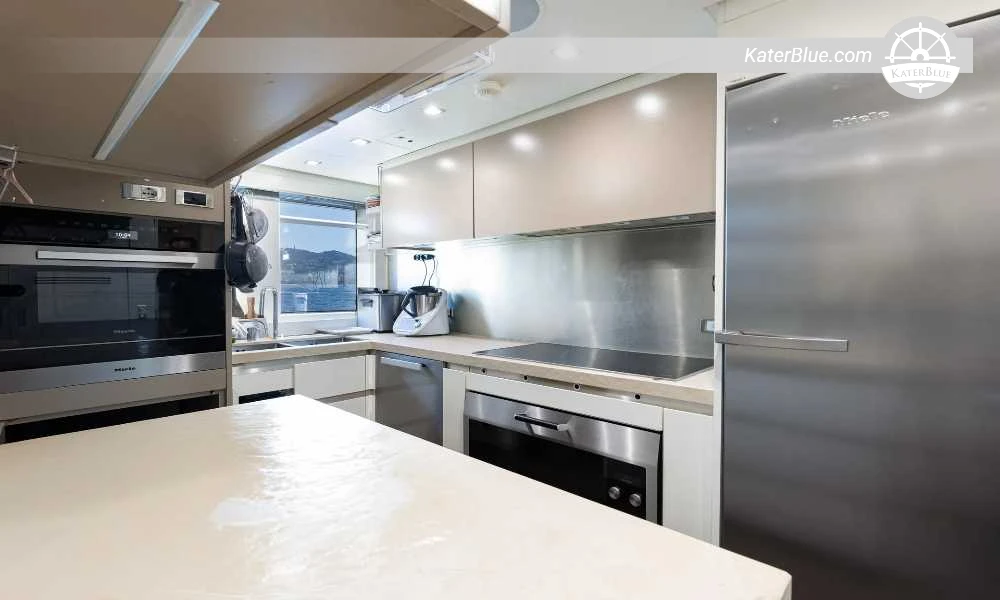
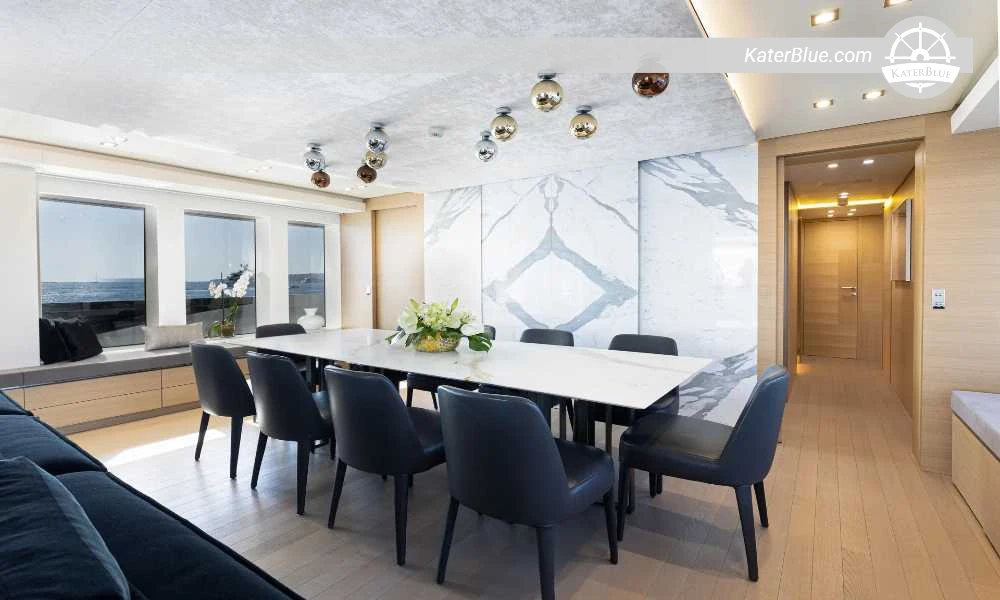
The interior has been designed by Hot Lab around a contemporary aesthetic that combines light woods, marble, polished stainless steel, soft carpets and timber flooring, creating a bright and refined environment that complements the yacht’s extensive glazing. The main saloon is arranged as a large open living and dining environment, providing a flexible area for both everyday use and formal entertaining. A sliding marble bulkhead conceals the television when it is not in use, maintaining a clean visual appearance when the entertainment system is not required. The main saloon also connects directly to the side balconies through sliding doors, allowing the interior to open toward the water and creating a more expansive feeling when the yacht is stationary.
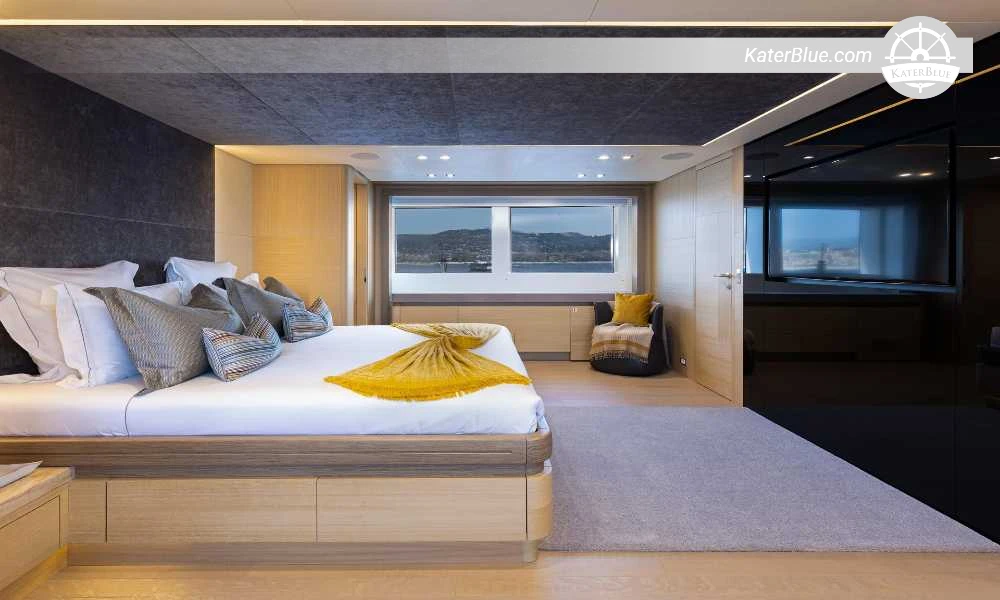
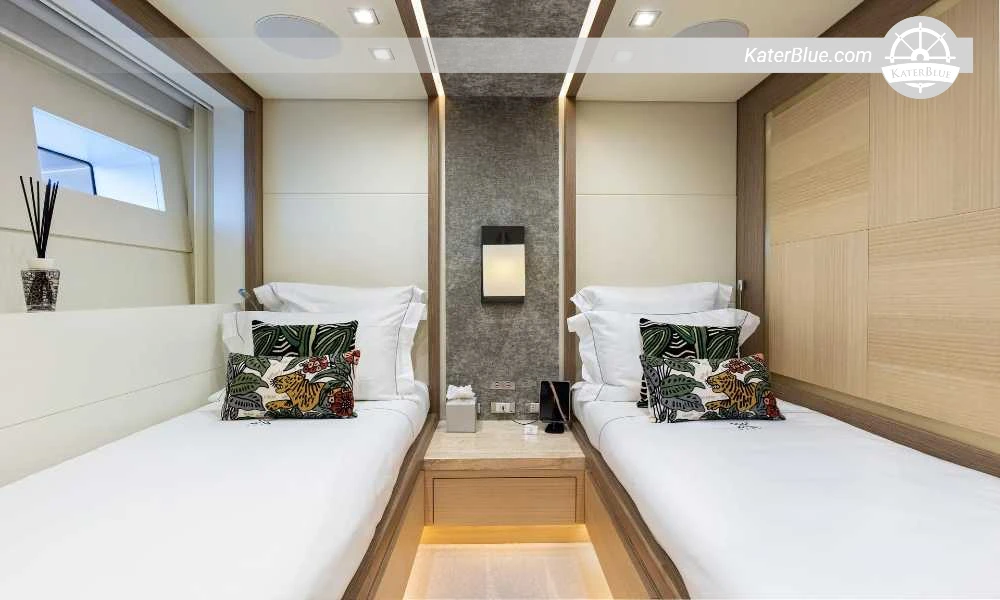
The upper saloon is intentionally more compact, allowing a greater proportion of the upper deck to remain dedicated to outdoor entertaining, dining and relaxation. This creates a useful secondary interior lounge while preserving the open-air character of the upper level. Accommodation is specified as five cabins, with an owner’s suite and four guest cabins. The supplied cabin arrangement is one owner cabin, two double cabins, two twin cabins and one Pullman berth, with crew accommodation for up to eight people across four crew cabins and a dedicated captain’s cabin. There is a small inconsistency in the supplied accommodation information: the principal specification states sleeping accommodation for 12, while the detailed cabin arrangement accounts for 11 berths when the listed Pullman is included.
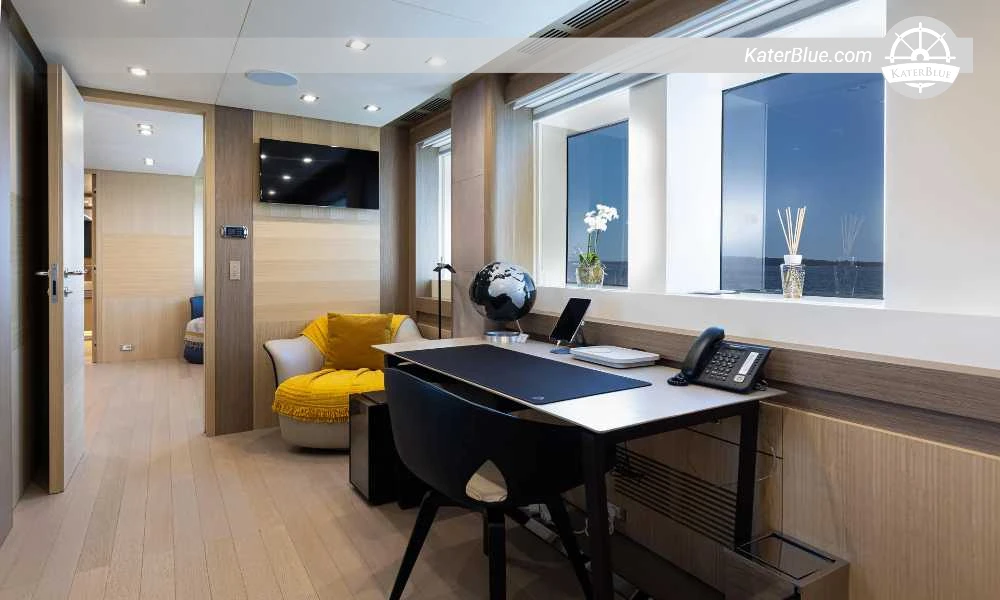
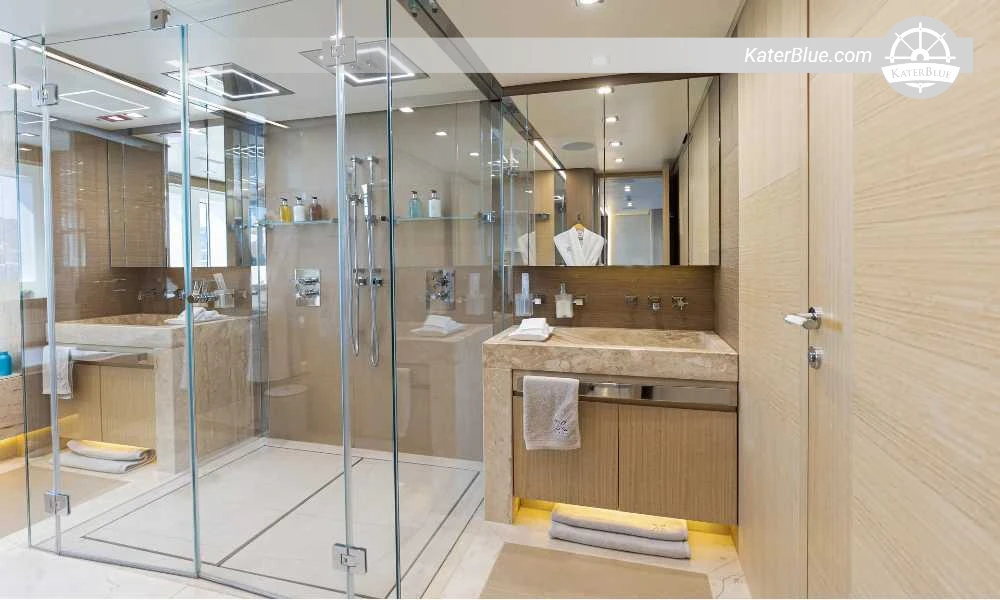
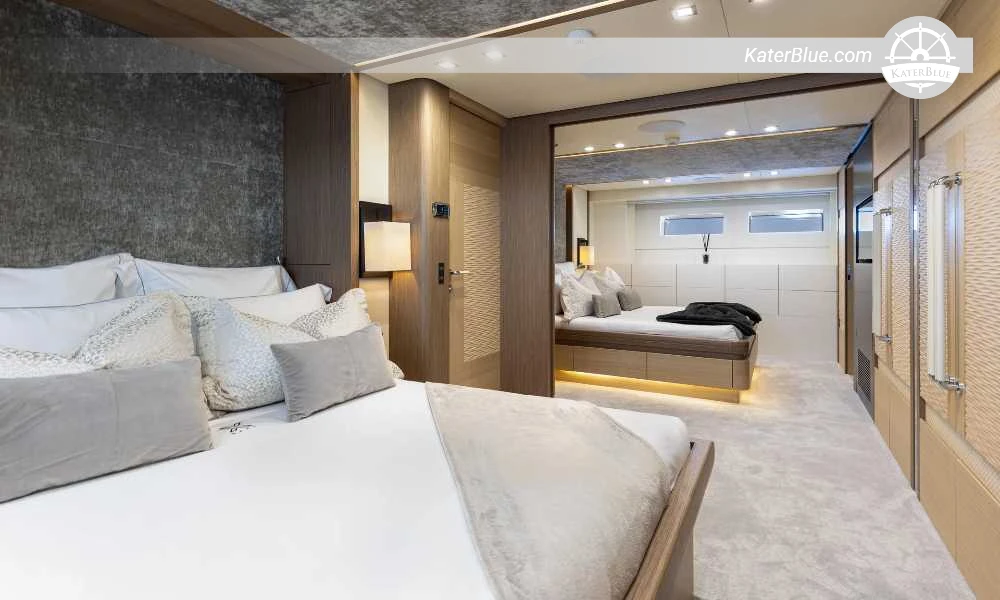
This should be confirmed against the current general arrangement plan and physical configuration before sale rather than assuming an additional berth that has not been documented. The owner’s suite is positioned forward on the main deck and includes an office, dressing room and a large en suite with a bathtub, double shower and twin marble basins. This creates a clearly defined private area separated from the principal guest and social spaces. On the lower deck, the two double and two twin guest cabins provide flexible accommodation for family groups or multiple guests. The two aft guest cabins can reportedly be converted into a larger full-beam VIP arrangement by removing the dividing wall, creating an adaptable configuration with a sofa, coffee table and two en suites.
This flexibility can be particularly useful for an owner who wants to alternate between maximum guest capacity and a more spacious secondary suite, although the exact current configuration and whether any structural or interior modification is required should be confirmed. The yacht is equipped with air conditioning, supporting interior comfort in warm cruising environments. Heating has not been specifically listed and should not be assumed. Entertainment equipment beyond the specified television arrangement has not been fully detailed, so the current audio-visual inventory should be verified. The exterior living areas significantly expand the usable accommodation. The upper aft deck provides an outdoor bar, dining area and sun loungers beneath awnings, while the main aft deck offers another built-in seating and dining environment.
The foredeck Jacuzzi is positioned between sunpads and loose seating, creating a more private leisure area away from the main aft social spaces. The beach club is approximately 15 square metres and incorporates a bar, head, showers and direct access to the sea, while the swimming platform and outdoor shower provide practical support for water activities. A tender garage provides dedicated storage and deployment capability for the Williams 435 tender, keeping tender operations separate from the principal beach club area. A gym is also specified, giving owners and guests the opportunity to maintain a fitness routine while cruising. The yacht’s Starlink, Wi-Fi and Satcom systems provide modern connectivity, although the exact hardware, service subscriptions and transferability should be confirmed.
No detailed specifications have been supplied for the freshwater pumps, bilge pumps, water heater, freshwater tank arrangement beyond the stated 6,400-litre capacity, grey-water system or black-water holding system. These systems should be inspected and tested during the survey. Similarly, no specific information has been supplied regarding fire suppression equipment, extinguisher inventory, life-raft certification or expiry, emergency systems or navigation-equipment verification. These safety and certification items should be reviewed against current statutory and flag-state requirements.
The yacht’s combination of contemporary Hot Lab interiors, extensive glazing, multiple outdoor areas, Jacuzzi facilities, gym, beach club, balconies, tender garage and modern connectivity creates an unusually versatile lifestyle platform for private cruising and entertaining.
Maintenance, Documentation & Purchase
From a purchase perspective, the yacht should be assessed through a structured due-diligence and survey process that verifies both the condition of the vessel and the accuracy of the technical and legal documentation. A physical inspection should cover the aluminium hull and superstructure, teak decks, structural areas, machinery spaces, accommodation, exterior decks, beach club, tender garage, swimming platform and underwater areas. Particular attention should be given to the aluminium hull and superstructure, including corrosion protection, coating condition, structural integrity and any areas that may have been repaired or modified.
The underwater inspection should include the propellers, shafts, rudders, thruster, sea chests and other underwater machinery, while the condition of the antifouling system should be established because no current antifouling condition or recent application date has been supplied. The HIN/CIN should be verified from the vessel’s documentation, and any available structural, repair and refit records should be reviewed. The 2022 refit is an important part of the vessel’s history, but the available information does not provide enough detail to state which systems were replaced or upgraded. Buyers should therefore request the complete refit scope, invoices, maintenance records, warranties and commissioning documentation.
A professional marine survey is recommended, with separate attention to the main MTU engines, hybrid propulsion equipment, gearboxes, shafts, propellers, steering system, bow thruster, stabilizers, generators, electrical distribution, batteries, inverter/charger, shore power and hotel systems. Engine hours, serial numbers, gearbox details, cooling systems, fuel filtration, exhausts and service records should be documented and compared with physical condition.
The hybrid system should receive particular attention because the current supplied material identifies an EcoProp/Siemens hybrid arrangement while the principal specifications separately identify General Electric diesel-electric equipment; the exact installed configuration and current operating condition should therefore be established from original technical documentation and onboard inspection. Sea trials should be used to verify engine performance, acceleration, cruising behaviour, maximum-speed performance where appropriate, manoeuvring, bow-thruster operation, stabilizer performance, electrical loads, hybrid operating modes and general vibration and noise levels. No trial charter is specified, so any pre-purchase trial should be arranged as part of the purchase process and subject to owner and operational availability.
The buyer should also verify all navigation and communications equipment, including the systems actually installed for radar, GPS, AIS, autopilot, chart plotting, communications and other electronics, as these have not been individually listed. Safety systems should be checked in the same manner, including fire detection and suppression systems, extinguishers, emergency equipment, life rafts and their certification dates. The yacht is stated to fly the French flag, but the supplied information does not confirm classification, VAT status, customs position, tax-paid status, import duties, ownership history, number of previous owners or previous operating profile. These matters should be established through the original registration documents, title records, tax documentation and professional legal and tax due diligence before completion.
Buyers intending to relocate or reflag the yacht should independently establish the applicable registration, VAT, import, customs, commercial-use and tax obligations in their intended jurisdiction. The purchase agreement should clearly define the vessel, equipment and tender included in the transaction, together with the agreed condition, inventory, documentation and any retained or transferable warranties. Deposit requirements, payment milestones, escrow arrangements and closing conditions should be established in the sale contract, while title transfer should be completed against the required documentation and confirmation that the vessel can be transferred free of undisclosed encumbrances. Delivery and relocation services are not stated as included in the supplied information and should therefore be agreed separately if required.
Financing or leasing availability has not been provided and should not be assumed. Additional water toys, spare parts, mooring arrangements and transferable warranties have likewise not been specified and should only be treated as included where they are expressly confirmed in the final inventory or purchase agreement. Overall, this 40-metre Columbus Yachts motor yacht combines a semi-displacement aluminium hull, 398 GT volume, 249-tonne displacement, twin MTU diesel engines, hybrid diesel-electric technology, 20-knot maximum speed, 15-knot cruising speed and a stated 3,300-nautical-mile range at 12.5 knots with a sophisticated Hot Lab interior and extensive outdoor lifestyle facilities.
The 15-square-metre beach club, side-launching tender garage, Williams 435 tender, foredeck Jacuzzi, twin saloon balconies, upper-deck bar, multiple entertaining areas, gym, stabilizers, bow thruster, Starlink, Wi-Fi and Satcom provide a broad and flexible platform for owners seeking a contemporary yacht capable of combining performance, comfort and extended cruising. The 2022 refit adds further relevance for a buyer assessing the yacht’s current presentation and equipment, while the detailed survey, technical inspection and documentary review will establish the exact condition and specification at the point of purchase.
For a buyer considering a fast, aluminium-built 40-metre yacht with hybrid propulsion and a strong emphasis on connection with the sea, this vessel offers a comprehensive platform whose final value should be assessed through verified technical records, independent survey findings, sea-trial results and confirmed legal and ownership documentation.
For further sales details on this 2015 Columbus Sport 40 MT Hybrid in Cannes, request the complete inventory and service file. Review the hybrid propulsion, Hot Lab interior and foredeck leisure area during a viewing, and confirm the documentation and purchase terms before proceeding.
Læs mere
Karakteristika
Producent : Columbus Yachts
Model : Sport 40 MT Hybrid
Fremstillet år : 2015
Antal kahytter : 9
Antal køjer : 20
Længde (meter) : 40
Bredde (meter) : 8.2
Dybgang (meter) : 2.29
Motor: i hk : 2x 1920
Motortype : 2x MTU 12V 2000 M94
Max Auth. Kapacitet: 12
Brændstoftankens kapacitet: 41800 ltr
Ferskvandskapacitet: 41800 ltr
Displacement (at full load): 249000
Maks. Speed (Kn) : 20.00 kn
Exterior Style & Concept: Hot Lab
Interior_designer: HydroTec
Status for annonceringen
Fremstillet land: Italy
Tilstand: Fuldt operationel
År for første registrering: 2015
Flag: France
Skat og andre uforudsete udgifter :
Ryddet
Detaljer om forsikring
- KaterBlue sikrer, at alle både, der kan lejes, er forsikret af deres respektive ejere. Vi anbefaler kraftigt, at man tegner en rejseforsikring for at beskytte sig mod eventuelle hændelser eller tab, der opstår uden for båden. Mens bådejerne forsikrer deres både, yachts, besætning og gæster mod brand, kollisioner og andre ulykker til søs, er gæsterne ansvarlige for at beskytte deres værdigenstande under turen. Hvis de foretrækker det, kan gæsterne aflevere deres værdigenstande til bådens kaptajn, så de kan blive opbevaret sikkert. I tilfælde af en ulykke eller katastrofe er det bådkaptajnens ansvar straks at informere KaterBlue eller dennes repræsentant. Hvis bådejerne ikke har tegnet de nødvendige forsikringer, vil de blive holdt fuldt ansvarlige. Lejere og gæster, der ønsker at dyrke vandsport, gør det på egen risiko og bør sikre sig, at de har deres egen forsikringsdækning.
Placering

Starter:
£8,925,000
- {{total_price_html}}
- {{pay_now_price_html}}
REQUEST PRICE
Salgspris fra start
£8,925,000